 Ronald S. Harichandran, Ph.D., P.E., F.ASCE
The Design Expo is an opportunity for our students to showcase the results from their senior design course. Student teams work to create a specific design solution for a "customer’s" real and unique need. Design and design education are, by their nature, experiential and collaborative, and our design team sponsors are our key collaborators. As a result of this collaboration, students bring energy and new ideas to meet the design need.
The design projects enable our students to put into practice what they have learned to prepare them for the workforce.
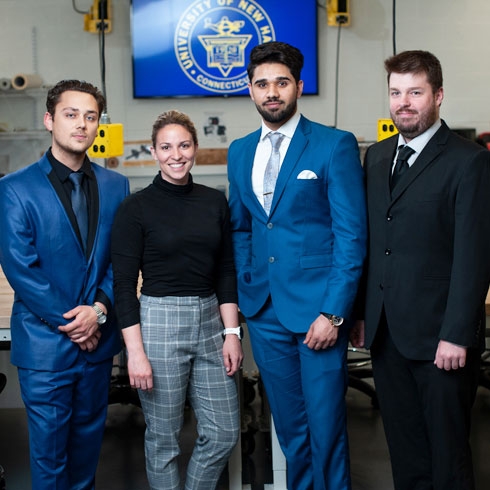
Raveed Ali, Maxine Dube, Igor Panchenko, and Tyler Wellington
Dr. David Harding
Joseph O’Day (Research and Development Director) and Kyle Schmidt (Research and Technology Engineer)
Albemarle Corporation, a specialty chemical company focused on lithium and bromine production, as well as refining catalysts for some of the world’s most critical industries.
To optimize the design of United States patent number 4,719,096: Continuous Two Stage Vacuum Process for Recovering Bromine. The invention removes elemental bromine from a feed brine stream via a two-stage subatmospheric apparatus using chlorine and steam. This process requires less steam and chlorine compared to prior processes. The final product shall provide 99.8 percent recovery of elemental bromine with minimal organic contaminants, and tail brine shall be within standards to return to the brine well.
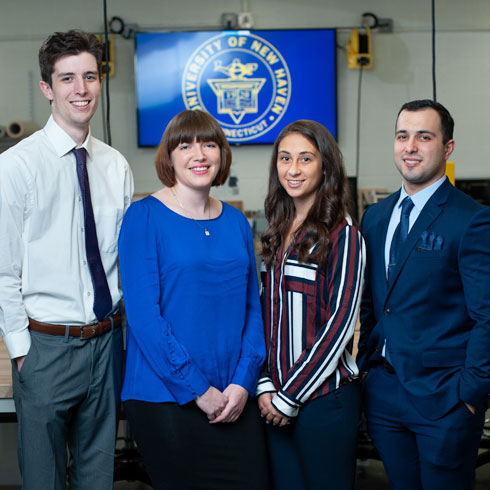
Danielle Belskis, Tyler Lafean, Stacie Meruelo, and Andrew Wallace
Dr. David Harding
Kyle Schmidt (Research and Technology Engineer) and Joseph O’Day (Research and Development Director)
Albemarle Corporation, a specialty chemical company focused on lithium and bromine production, as well as refining catalysts for some of the world’s most critical industries.
To develop and design the most economical plant for processing bromide-salt containing brine to produce elemental bromine. Bromine is used in various industrial applications for pharmaceuticals, agricultural processing, and dyes. The project seeks to generate a full-scale processing plant for Albemarle’s joint venture in Safi, Jordan, which utilizes water from the Dead Sea. The final design should be feasible with accurate equipment sizes, specifications, and capacities, as well as a projected financial estimate including all installation costs.
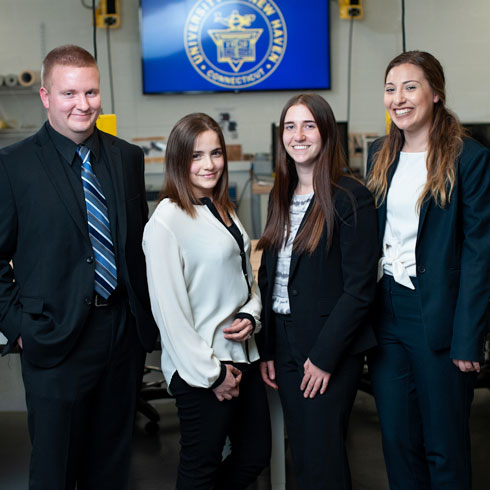
Anna Mercaldi, Kirsten Petry, Angelina Siragusa, and Jason Egbert
Dr. David Harding
To simulate and evaluate the feasibility of drying municipal solid waste prior to incineration, and assess the recovery of usable energy. The project seeks to determine if the proposed method is more efficient from an operability and economic viewpoint than the existing process used today by many waste-to-energy facilities.
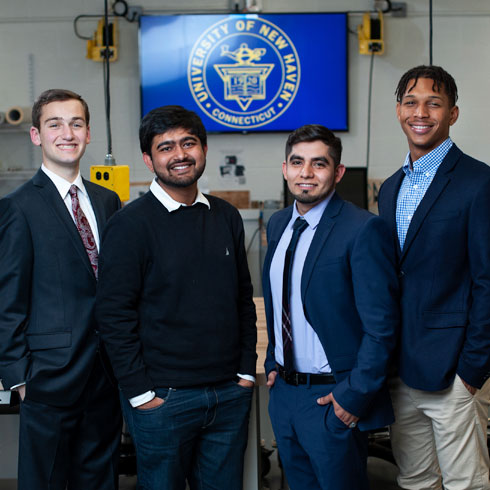
Monil Nanavati, Rudber Duran, Taylor Darville, & Thomas Criscione
Dr. Byungik Chang
Louis Annino (Associate Vice President and Chief Facilities Officer), University of New Haven
To design a pedestrian bridge over Campbell Avenue that will connect the Main Campus to Charger Plaza. This project seeks to provide a safe route for students and staff members to cross safely above the street, without interrupting the flow of traffic below.
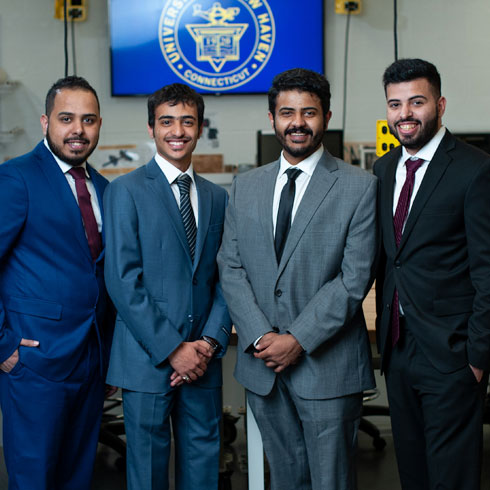
Mohammed Alraddadi, Umar Alraddadi, Mohammed Alqurayshah, & Mohammed Algareshah
Joseph Balskus, P.E.
To redesign the Derby Avenue and Ella T. Grasso Boulevard intersection using Continuous Flow Intersection (CFI) orientation. Alleviate the high traffic volume, which causes increased delay times and air pollution. Allow for a higher traffic capacity and reduce delay times.
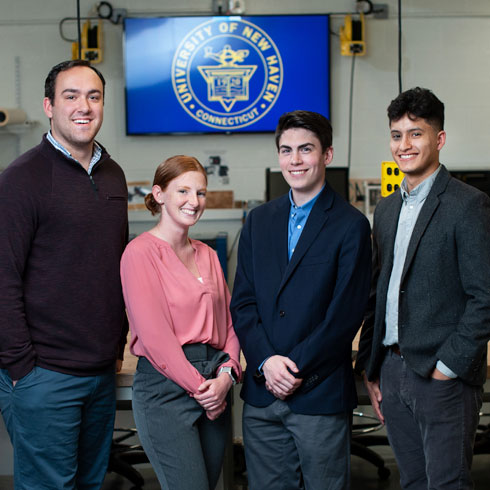
Charlie Ricard, Nolan Barrett, Pablo Perez, & Alexa Girimonte
Joseph Balskus, P.E.
To design a roundabout for the intersection of Hebron Avenue and Main Street in Glastonbury, Connecticut. The project seeks to cut down on heavy traffic and congestion at the location mentioned. Successful construction of this project will streamline traffic flow and reduce emissions, as well as improve air quality and the driver’s experience throughout Glastonbury’s downtown area.
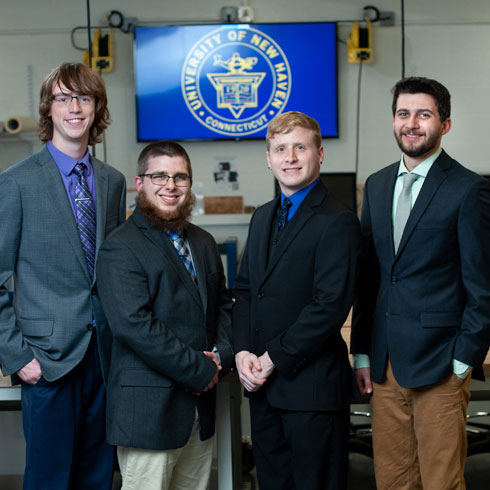
Mark Lucich, Cory Senney, Daniel Woronick, & Andrew Sarza
Marie Bartels, P.E.
To develop a steeply sloped and wooded site for a future middle school in Groton, Connecticut. Development includes grading the site and locating the school, parking, driveways, athletic fields, utilities, and retaining wall(s) within the available nine acres. Building foundations will be sized, retaining walls will be designed, and section thicknesses for pavement and fields will be provided.
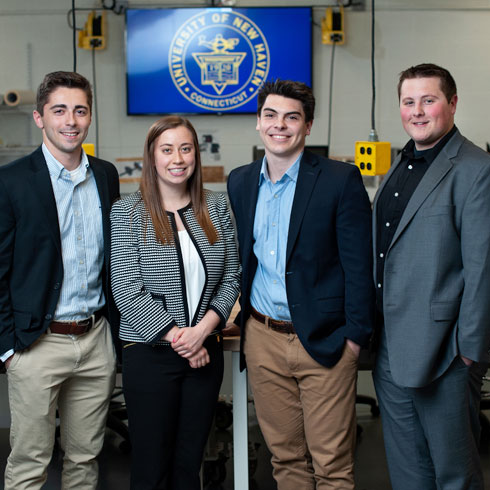
Avind Baur, Emily Giordano, Nicholas Monte, & Keiran Ryan
Marie Bartels, P.E.
James Kousidis, P.E., Kousidis Engineering, LLC.
To design a new sports facility for Simsbury High School including a synthetic turf field, tennis courts, adequate field lighting, bleachers, and a multi-use facility. The design will include locating the facility features, including the structural design of the building, lighting, and bleachers, as well as providing section thicknesses for roadway/sidewalks, athletic field, and tennis courts. The design will meet the requirements of the school while complying with all codes and regulations set forth by the state of Connecticut and the town of Simsbury. The site will also be designed in a sustainable, yet affordable, manner that will produce the most beneficial solution to all stakeholders.
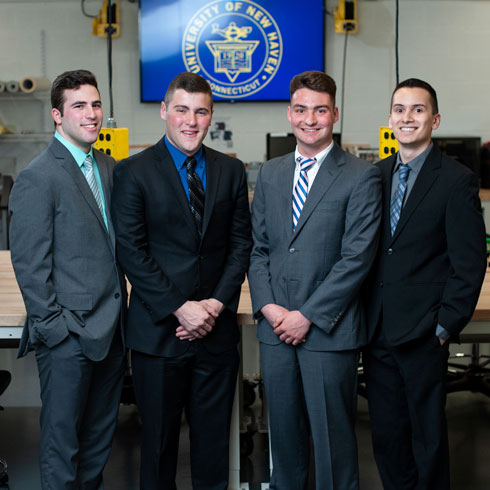
Nicholas J. Ciarlo, Joseph Maroukis, Bryce Martin, & Pedro Martinez
Dr. Jean Nocito-Gobel
Mark Paine (Assistant to Commissioner of Public Works), city of West Haven, Connecticut
To alleviate the flooding and property damage that currently occur during storm events along Lake Street in West Haven, CT. To redesign the drainage infrastructure while improving water quality. Use of stormwater manufactured treatment devices (MTDs) should result in the reduction of silt deposits and algae growth in the local storage pond. The aim is to improve water quality by storing water to be slowly discharged into the ocean, at a rate that would prevent flooding and limit pollution.
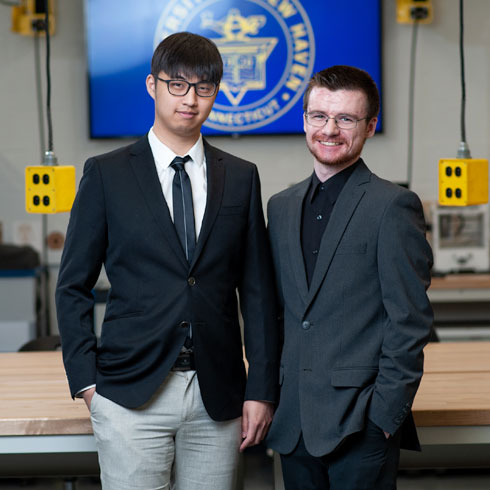
Chris Hayes & Wu Yuanxiang (Computer Science)
Dr. Frank Breitinger and Liberty Page
Dr. Chong Qiu
To make the generation of light absorption and extinction data on complex soot aggregates as easy and intuitive as possible for researchers and scientists. Format the data of the fractal nanosphere models produced by FracMAP to be read by ADDA for light absorption and extinction analysis. The accuracy of the results produced by FracMAP will be verified by means of extensive testing on the University of New Haven cluster. Based on the results, any needed adjustments or optimizations will be implemented into FracMAP followed by combining this tool with FracMAP to create a simple, straightforward experience.
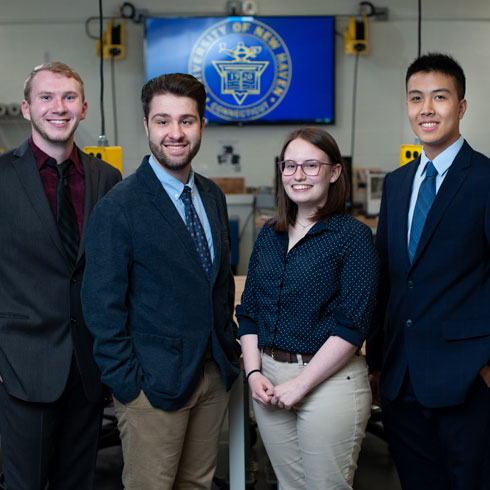
Lishun Huang, Jillian Jacques, Larry Studwell, & Spencer Tasso (Computer Science)
Dr. Frank Breitinger
Emily Yale
To design and implement a database that stores measurements received from a robot. The second part is to take the data from the database and display them in an easy to use website. This display will be based on a Google map API, so accurate longitude and latitude can be used to display which parameters are within acceptable limits and what areas need attention.
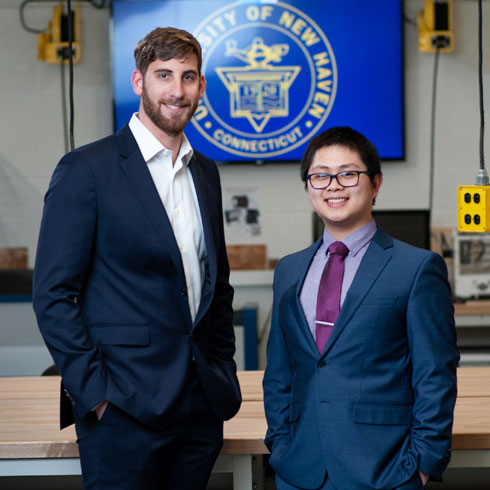
Nathan Martino & William Lin (Computer Science); Andrew J. Rittenhouse (Cyber Systems)
Dr. Frank Breitinger and Liberty Page
Shanique Richard (Co-Founder) and Isamar Gomez (Co-Founder and Creative Director), Conferdense
To design, build, and deploy a mobile platform to connect users with conferences around the world. The app will aggregate disparate conference databases into one location to improve user experience and provide a one stop shop for all conference needs. In addition to a seamless search experience, users will have a social platform to connect with conference organizers and others attending a given event. The application will target the Android operating system with plans to expand to iOS.
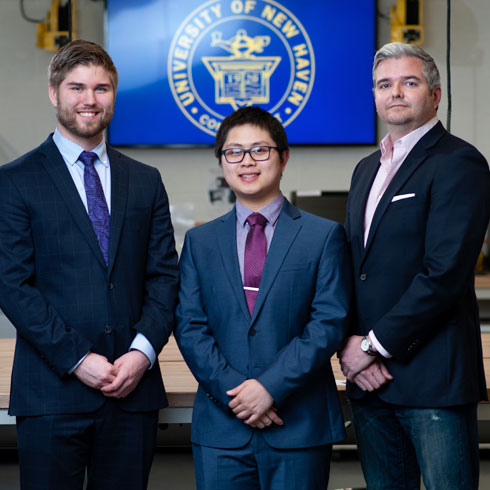
William Lin & Alec Shackett (Computer Science); Jared Sheffield (Computer Science and Finance)
Dr. Frank Breitinger and Liberty Page
To design a sentiment analysis application capable of crawling various online media platforms (e.g., Twitter) for alternative information on targeted companies or cryptocurrencies. Applying machine learning, a sentiment score can then be calculated on the textual information (e.g., a positive statement about bitcoin). Lastly, the score can be used as a forecasting tool for the future price of the targeted stock or cryptocurrency.
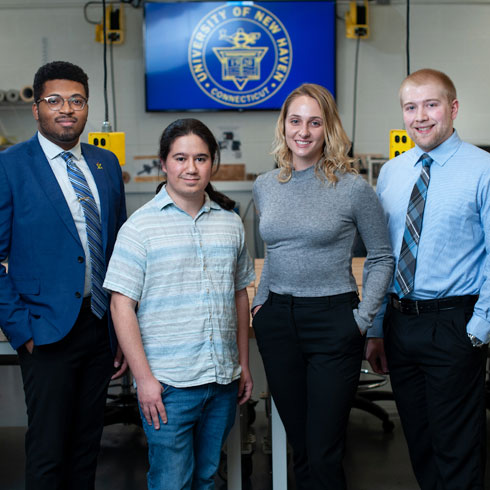
Nicholas Bellinger, Jennifer Sullivan, & Michael Torres (Computer Science); Aaron Townsend (Cyber Systems)
Dr. Frank Breitinger and Liberty Page
To develop and design a parking lot application that can be used by University of New Haven students and faculty members, enabling them to find available parking spots throughout campus. This application will make it easier and more efficient for students and faculty to find parking. The approach will be based on machine learning and AI to identify moving and parked vehicles in order to keep track of parking space availability. Tensor flow will be used to count cars in a parking lot versus space availability, and the data will then be pulled into an application that can be updated in real time and used on a smart phone to identify parking space availability.
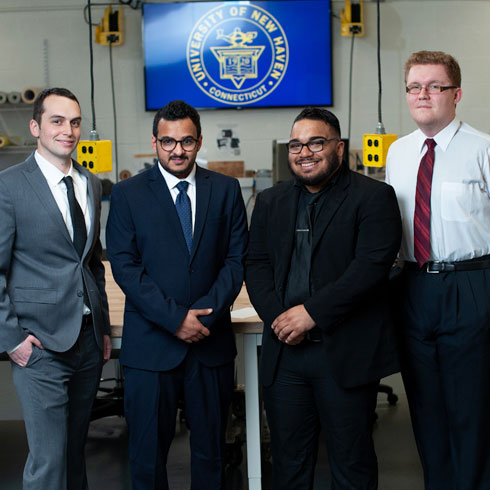
Anthony Summa, Raed Alzahrani, David Zych, & Johan Guzman
Dr. Amir Esmailpour
To design and simulate an information systems network for the University of West Haven. Design will be implemented through a multi-phase approach based upon customer goals. Simulation will demonstrate LAN and WAN connectivity throughout the proposed network, supplemented by documentation that will recommend policies to ensure the effective management, security, and maintenance of the network.
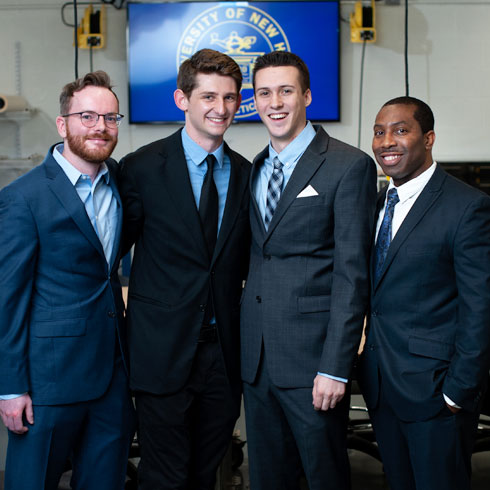
Michael Bond, Kevin Coiro, Ian Murphy, & Nicholas Rousso (Electrical Engineering)
Drs. Bijan Karimi and Mohsen Sarraf
Dan Luttrell, Owner, Kriterion, LLC
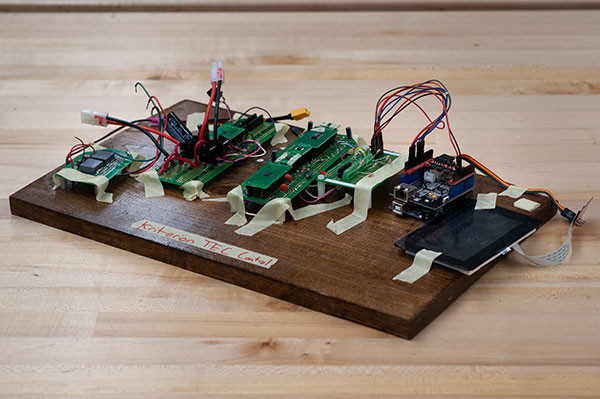
To design and build a control module to be interfaced with Kriterion’s existing temperature control systems. The control module will have a user interface for operator interaction, and it will read temperature data to adjust fans, log data, and connect over a network. This project seeks to replace the existing Programmable Logic Controller (PLC) with a cheaper microcontroller solution.
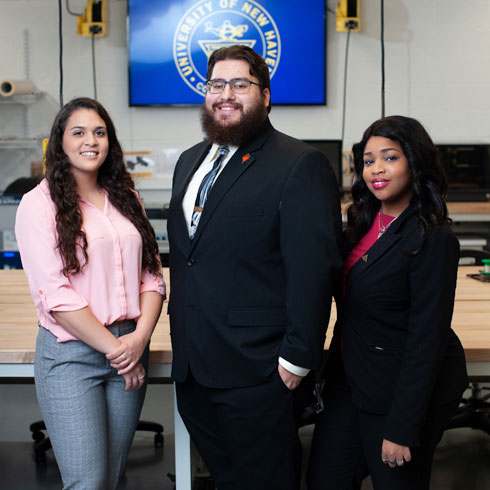
Charles Kmiec & Dajsha Perrin (Computer Engineering); Kristine Rios (Electrical Engineering
Dr. Mohsen Sarraf
University of New Haven
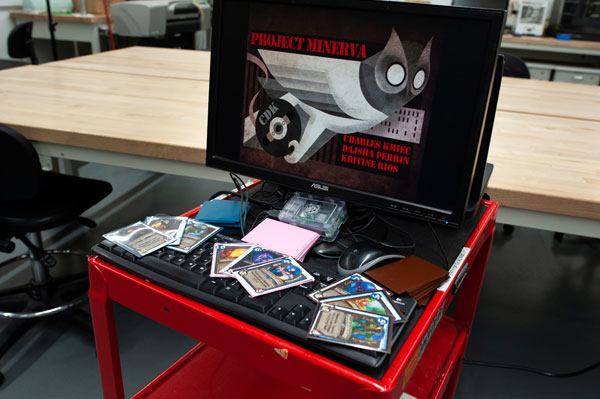
To design and build an interactive NFC reader board game that will react to a series of playing cards. The project seeks to produce excitement in players who enjoy playing strategic card games. The board will light up, shake, and play sounds associated with what card has been played. Each card needs to be programmed with its own board response. Three hundred cards should be designed and programmed, ensuring a diverse collection of cards to demonstrate unique interaction with the board. The NFC board is designed with portability in mind, but it will also be comfortable for players who want it to remain stationary. Each player will also be capable of customizing their side of the board with their own flair – designated by magnets in each of the four corners.
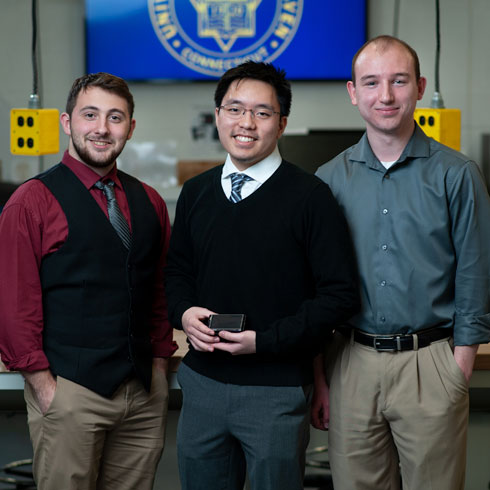
Ryan Olah (Electrical Engineering); Ray Hofferman & Salvatore DelCollo (Computer Engineering)
Dr. Bijan Karimi
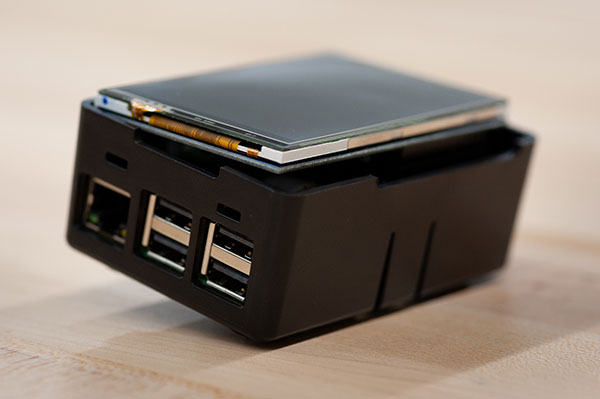
To design a handheld device that obtains valuable information from the network when connected to an Ethernet port. The information will be displayed on a screen within the device. The network tester will also be able to run off power over Ethernet (PoE), reducing the amount of connections and making this device as portable and compact as possible. This project seeks to eliminate the need for a computer to test a network. The process should be done with a network connection and the push of a button.
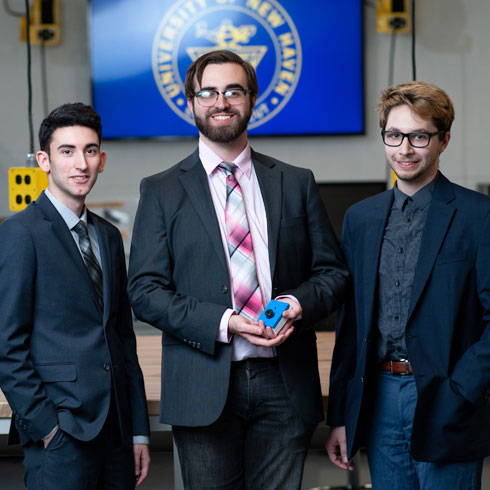
Samuel Opper & Anthony Gioino (Computer Engineering); Kevin Taisma (Electrical Engineering)
Dr. Bijan Karimi
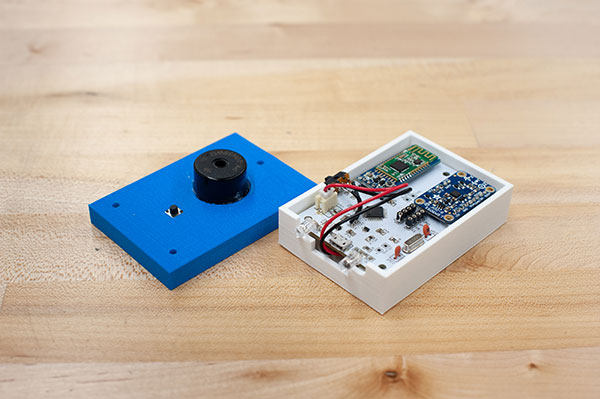
To design and build a wearable device that detects when the wearer falls. The device detects a fall by monitoring the wearer’s 3-dimensional angular velocity and orientation with respect to gravity, then notifies a person or device of the wearer’s GPS location so that the wearer can be located after falling. The device provides an alternative method for emergency medical services to respond to a person in need of assistance. The detection threshold will be optimized to minimize false alarms.
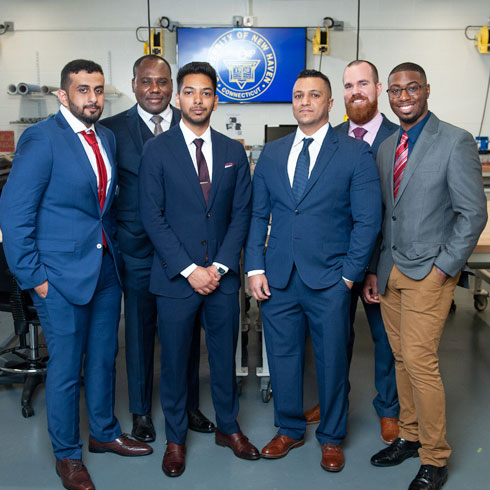
Daniel West, Jason Rowe, Jackson Sanon, Yassine Bouzerda, Faris Almansour, & Muhannad Almatrafi (Electrical Engineering)
Dr. Mohsen Sarraf
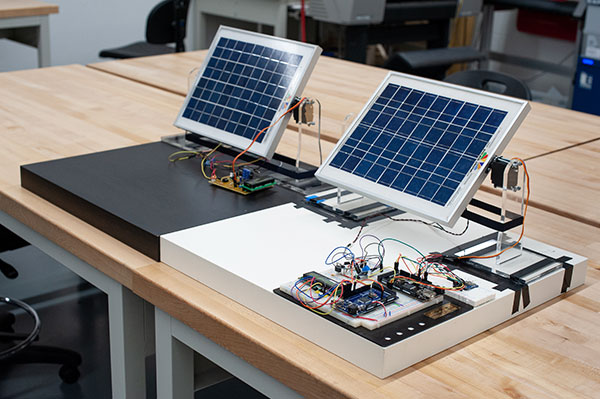
To build and test two identical solar power system designs, making improvements to one of the systems. The primary improvement will be achieved by adding a second axis of rotation so that the system will always be facing the sun during the day. Power generation data will be collected and analyzed for both systems to examine how much more power is generated by the improved system.
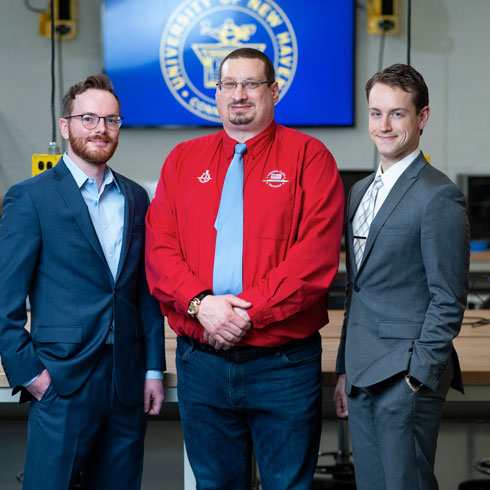
Matthew DiBlanda (Electrical Engineering); Robert Thompson & Kevin Coiro (Computer Engineering)
Dr. Bijan Karimi
To design a system that uses security cameras placed in parking lots to detect vacant parking spaces and provide that information to a mobile application, enriching the parking experience for commuters. This project will serve as a less expensive alternative to using hardware-based car detection systems, which are often costly. The final error rate of this project’s system must be weighed against the actual cost savings of a hardware implementation, and it must be viable when considered under such scrutiny.
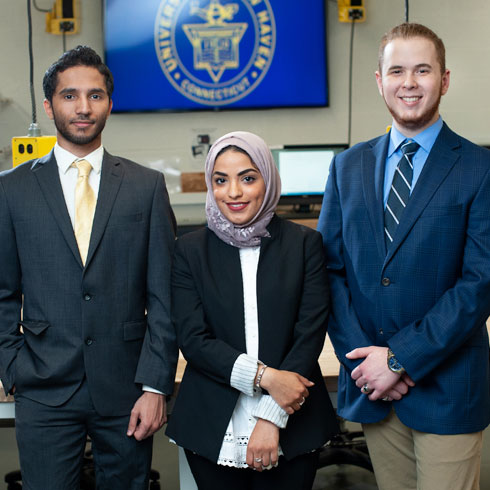
Andrew Valenta, Raghad Alhazmi, & Reshedan Alreshedan
Laurence Levine
Diane Buhr (Core Facilities Manager and Senior Associate Scientist), AxioMx
AxioMx – an Abcam company – provides a unique, cost-effective, and proprietary platform to produce recombinant monoclonal antibodies complementing Abcam's existing innovative production capabilities.
To create a dashboard application to automate the collection of antibody manufacturing process statuses and quality data. A complex, multistep process is required to manufacture antibodies for medical and research purposes. This activity will provide process visualization to enable the identification of potential process improvements and automation. In addition, a process dashboard application will be developed to collect, analyze, and display process performance and quality data. This will facilitate tracking performance trends to monitor operating efficiency.
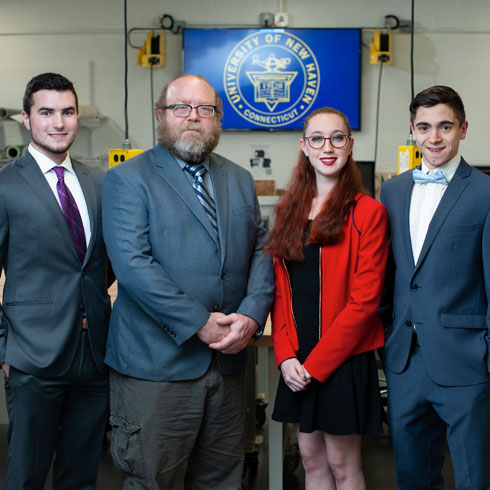
Sarah Flynn & Joseph Coppola (Mechanical Engineering); Thomas Morris & Nicholas Mahar (Chemical Engineering)
Dr. Joseph Levert
Dr. Chong Qiu
To design and build a thermal denuder that allows the heating of aerosol streams. In addition, the device will adsorb volatile compounds that may be present in the heated stream to prevent unwanted re-condensation onto aerosol particles. This denuder will fully integrate with an existing aerosol detector apparatus, which is being used for research at the University of New Haven. The device will use electrical resistance heating with PID control and temperature sensors to heat the aerosol stream, and it will use a rechargeable adsorption unit to efficiently adsorb volatile particles.
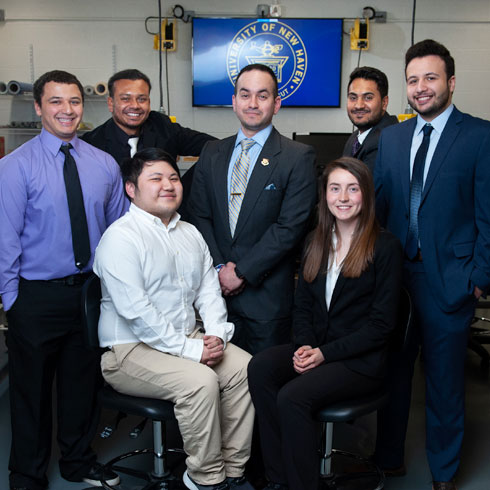
Nicole Maliborska, Dave Garcia Jr., Jaskaran Singh, & Aurochit Patnik (Electrical Engineering); Eyad Esmail (Computer Engineering); Gary Yeung & Cody Nieves (Mechanical Engineering)
Dr. Bijan Karimi
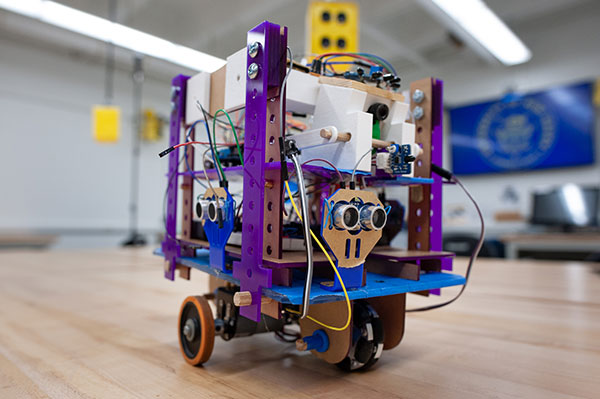
To design a self-navigating autonomous robot based on criteria specified by Trinity College’s Robotics Contest. The robot should be capable of navigating a maze to find a candle, extinguish it, and return to its starting point. It should be able to make ‘split second’ decisions ‘autonomously’ using Arduino microprocessors and available information through infrared fire detection sensors and ultrasonic distance sensors. The mazes designed by Trinity College are meant to simulate real fire scenarios and hazards on a smaller scale. A robot capable of detecting and extinguishing fires on its own will be able save the lives of building residents and firefighters.
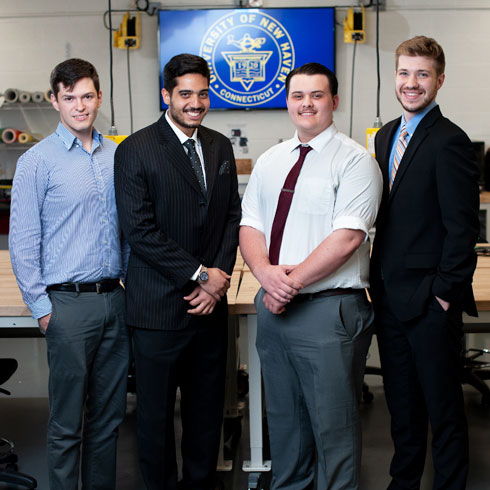
Eric Bundschuh, Wessam Hoda, Vincent Iacona, & Jesse Pallo (Mechanical Engineering); Gabriel Bitzer (Fire Protection Engineering)
Dr. Joseph Levert
Luke Sisson (Lead Regulatory Engineer), Honeywell
Honeywell, Building Technologies, optimizing integration-based fire and life safety solutions while protecting investments and helping to reduce costs.
To develop and verify a repeatable and reliable test procedure process for measuring the temperature of circuit board components on fire alarm panels using infrared imaging technology. The project aims to create a suitable replacement for the current test procedure utilized by Honeywell. Currently, Honeywell relies on individual thermocouples to measure dozens of circuit board components, a process that takes a great deal of time and results in high costs and slow development cycles. This testing – a requirement for Honeywell products – is regulated by Underwriter’s Laboratory (UL), as these are integral parts of life-saving equipment, requiring a high standard of reliability. The new infrared testing procedure is to be submitted for approval by UL.
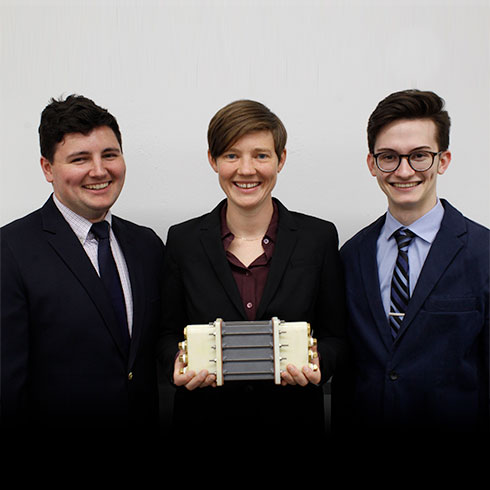
Noah Dinaso, Leah Lansdowne, & Austin Thomas
Dr. Ismail Orabi
Elspeth Ochs (Design Engineer), Gregory Quinn (Research Engineer), Mark Zaffetti (Design Engineer), and Jeremy Strange (Research Engineer)
Collins Aerospace – a leader in technologically advanced and intelligent solutions for the global aerospace and defense industry.
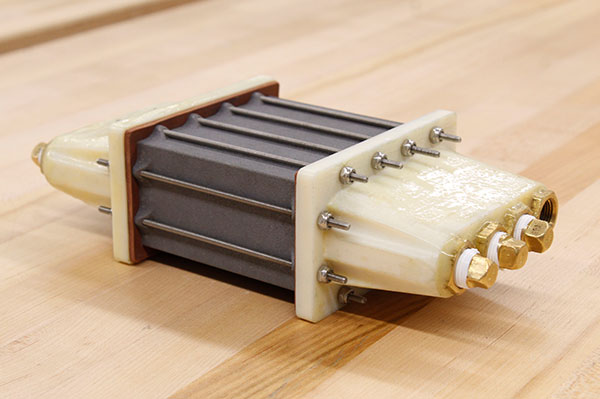
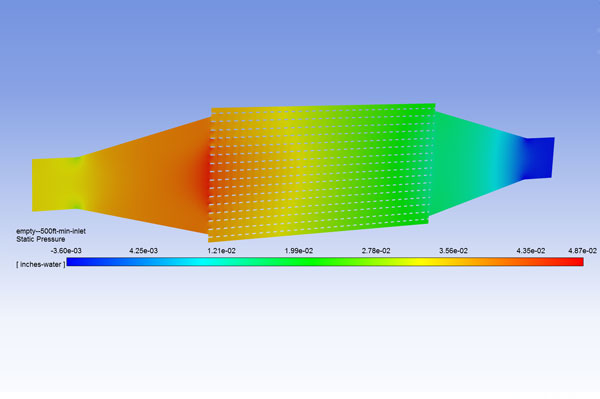
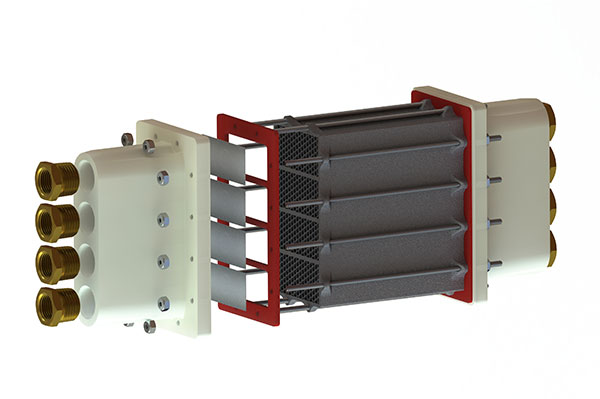
To design and fabricate a new open-cell structure for an amine swingbed that can be additively manufactured from aluminum. The amine swingbed is a device used to remove humidity and carbon dioxide from breathable air in a space shuttle. The replacement structure must meet or exceed the performance of the previous aluminum foam structure in the categories of strength, thermal performance, and pressure drop. The replacement structure was validated by data from tensile, heat exchanger, and pressure drop tests against predictions generated from FEA and CFD models. The results show that the replacement structure successfully leverages additive manufacturing to enhance the performance characteristics of the amine swingbed.
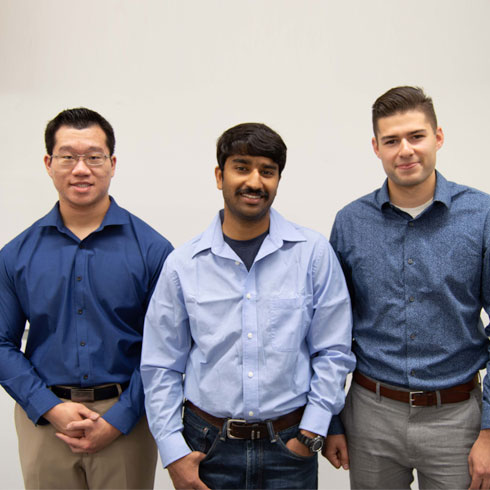
Prathamesh Patil, Kyle Nguyen, & Weston Ogle
Dr. Ismail Orabi
William Welsh (Senior Tech Fellow)
Lockheed Martin-Sikorsky Aircraft Corporation, designer and builder of the world’s most advanced helicopters for commercial, industrial, and military uses.
To design and implement a vibratory control moment gyroscope that will create a moment to counteract the vibrations generated by the Sikorsky S-97. The control element of the device will allow the gyroscope to adapt to all the changing conditions that the airframe will experience in flight. The lightest and most compact design that will achieve this in the time required will be created.
Pat O’Neill, Brandon Frankel, & Matthew Sheehy
Dr. Ismail Orabi
Matt Cavanaugh, John Mainetti, and Tom Dumas
The Lee Company, designer and builder of state-of-the-art miniature fluid control products that exceed customer expectations for utility, performance, and quality.
To design and build a highly automated self-contained enclosure that will measure and record the pressure, flow rate, RPM (frequency), current, and temperature of Mil-PRF-7024 calibrating fluid for the Lee series 200 and 60 positive displacement pumps. Acceptance testing of the pumps will include well-defined operating pressures and flow rates at a given pump motor frequency.
Eric Bundschuh, Wessam Hoda, Vincent Iacona, & Jesse Pallo (Mechanical Engineering); Gabriel Bitzer (Fire Protection Engineering)
Dr. Joseph Levert
Luke Sisson (Lead Regulatory Engineer), Honeywell
Honeywell, Building Technologies, optimizing integration-based fire and life safety solutions while protecting investments and helping to reduce costs.
To develop and verify a repeatable and reliable test procedure process for measuring the temperature of circuit board components on fire alarm panels using infrared imaging technology. The project aims to create a suitable replacement for the current test procedure utilized by Honeywell. Currently, Honeywell relies on individual thermocouples to measure dozens of circuit board components, a process that takes a great deal of time and results in high costs and slow development cycles. This testing – a requirement for Honeywell products – is regulated by Underwriter’s Laboratory (UL), as these are integral parts of life-saving equipment, requiring a high standard of reliability. The new infrared testing procedure is to be submitted for approval by UL.
Justin Casa, Joanne Yeung, & Nashrul Khairi
Dr. Ismail Orabi
Mikel Brigley, Dynamics Group
Lockheed Martin-Sikorsky Aircraft Corporation, designer and builder of the world’s most advanced helicopters for commercial, industrial, and military uses.
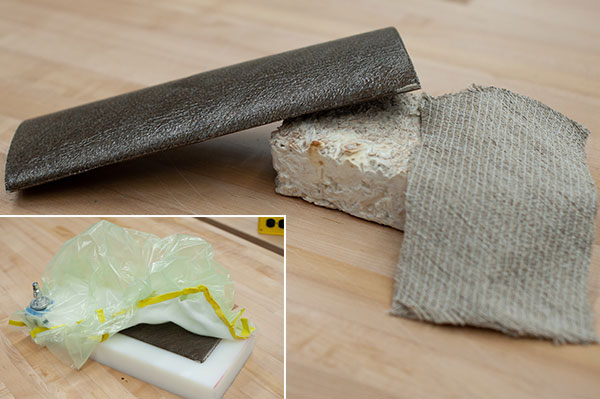
To fabricate and optimize a composite beam with an elliptical cross section using flax fiber and mycelium by testing its properties. The materials used in the composite are biodegradable and cost less to produce than those currently used in the industry. Optimizing the beam’s stiffness to weight ratio will allow it to be used for non-structural components of aircraft. The composite beam will be fabricated through wet lay up using mold under vacuum conditions. The beam’s mechanical properties will be tested using a three point bending test.
Tyler DeVellis, Justus Huffstutler, & Callia Ricozzi
Dr. Ismail Orabi
Griffin DeLancy (Sr. Advance Materials Engineer) and Kevin Golebieski (Sr. Advanced Engineer)
Medtronic (Covidien Division), developer of medical innovations to provide impactful surgical solutions and advance patients’ monitoring and recovery.
To redesign Medtronic’s testing station apparatus for their laparoscopic, surgical stapler cartridges. The new testing station is optimized to minimize the duration of testing while being ergonomically efficient for the operator. This is achieved through the automation of cartridge firing rather than a user interaction. The apparatus is fully enclosed to ensure the safety of the operator and it is adaptable to testing cartridges from a variety of product lines. The new testing apparatus eliminates the need to use expensive, single-use components from production lines, greatly reducing cost. A user will be able to tabulate and export data from respective samples into a graphical format for retrieval via the user interface for further analysis.
Dimas Catalan Brown, Olivia Passin, & Kevin Rivas
Dr. Ismail Orabi
Jack Fruin Sr. (Product Engineer), and Jonathan Spiegel (Application Engineer)
RBC Heim, provider of global industrial, aerospace, and defense customers with unique design solutions to complex problems and an unparalleled level of service, quality, and support.
To create an analytical and physical tool to accelerate the development of elastomer bearings. As the opportunities for RBC bearings expand in the growing elastomer bearing market, their development processes need to be improved. It is our goal to fulfill this task so that the optimization process for elastomer bearings is improved.
Makiah Coley, Caner Kilinc, Matt Malone, & Reinaldo Buitron
Dr. Joseph Levert
Zully Rivera-Pacheco (Associate Scientist), New Product Development, Abcam
Abcam, an influential life science company for researchers worldwide to support research, diagnostic, and therapeutic applications.
To design a protein chemical analysis plate with a standard 96 well configuration for Abcam’s new "blot test" protocol. This plate will replace the costly existing "western blot test" with a more efficient blot test protocol, yielding quantitative data that the western blot test cannot. The design will use a standard, low cost, polystyrene 96 well plate in which small pieces of the required (nitrocellulose) membrane will be inserted in every well with user-friendly fixtures. The nitrocellulose membrane will be held in the 96 well plate with a thin, removable retainer. This design enables all chemical additions/subtractions for the blot test protocol with full automation, enabling cleaning and reuse of the well plates and retainer.
We thank our industry sponsors who served as customers for our students as well as supporting their prototyping expenses. As customers, they gave valuable time and insights that uniquely benefited our students with an experiential design education in a real-world setting, which greatly complements the team mentoring by our faculty colleagues. Their generous commitment to our students brought their design education to life.