

Program Quick Facts
Total Credits: 131
Time to Complete: 4 years (8 semesters)
Focus Areas: Regenerative Medicine, Devices, Digital Health & AI
College: Taglietela College of Engineering
Department: Chemistry and Chemical & Biomedical Engineering
Why Biomedical Engineering?
Biomedical engineering is transforming healthcare by combining engineering, biology, medicine, and artificial intelligence to solve problems in human health, biotechnology, and patient care. Accordiong to the U.S. Bureau of Labor Statistics, employment of biomedical engineers is projected to grow 8 percent from 2025 to 2035, much faster than the average for all occupations.
Biomedical Engineering at the University of New Haven
The Bachelor of Science in Biomedical Engineering at the University of New Haven is an interdisciplinary, laboratory-intensive program that prepares students to apply engineering to problems in human health, medicine, and biotechnology.
Our program goals align directly with what professional biomedical engineers do on a daily basis:
- Apply engineering principles to improve human health in healthcare, medicine, and biotechnology.
- Translate scientific advances into practical biomedical solutions for disease and injury.
- Design innovative, effective, and socially responsible biomedical technologies and systems.
Grounded in the Tagliatela College of Engineering’s applied and innovation-focused environment, the program emphasizes hands-on learning through laboratory experiences, design projects, faculty-mentored research, and industry-connected opportunities.
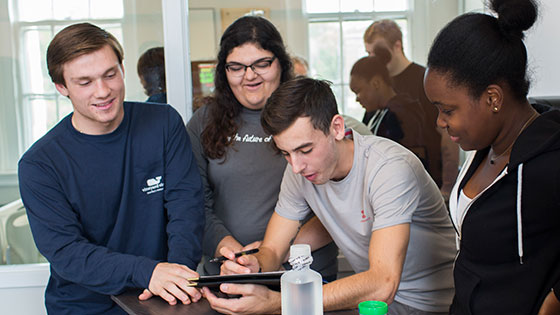
Explore the frontiers of biomedical innovation by working alongside faculty on real biomedical research.
Undergraduate research helps students build technical skills, strengthen their resumes, prepare for graduate school, and explore career interests in biomedical engineering and biotechnology.
Tissue Engineering & Regenerative Medicine
Explore stem cell engineering, regenerative medicine, biomaterials, drug delivery, and biomedical nanotechnology. Engineer biomaterials, stem-cell technologies, and tissue replacements that help repair or regenerate damaged tissues.
Biomedical Devices & Bioinstrumentation
Develop skills in biomedical devices, bioinstrumentation, medical imaging, biosensors, and measurement systems. Design and test medical devices, wearable technologies, biosensors, and diagnostic instrumentation that improve patient care.Digital Health, Medical Software & AI
Apply computational tools to biomedical data, digital health, medical software, medical decision support, and healthcare technology. Develop intelligent healthcare technologies that combine biomedical engineering, medical data, computational modeling, and artificial intelligence.

What Makes the University of New Haven's Program Different?
Hands-on, AI-integrated, and built around real healthcare challenges.
Students do more than study biomedical engineering concepts. They apply them through laboratory work, design projects, research, data analysis, and team-based problem solving.
AI-Integrated Curriculum
Learn how artificial intelligence, machine learning, and computational tools are transforming medical devices, diagnostics, digital health, and biomedical research.Laboratory-Intensive Learning
Build, test, measure, and analyze biomedical technologies through hands-on laboratory courses and engineering experimentation.Faculty-Mentored Research
Work directly with faculty on research in regenerative medicine, biomaterials, biomedical devices, bioinstrumentation, nanomedicine, and digital health.Design-Build-Test Experience
Identify problems, design solutions, test prototypes, analyze results, and improve performance while considering safety, ethics, and patient outcomes.Industry-Connected Opportunities
Gain practical preparation for Connecticut’s medical technology, biotechnology, pharmaceutical, and healthcare innovation sectors.Personalized Education
Benefit from small classes, close faculty mentoring, and opportunities to participate in undergraduate research and design experiences.Career Outlook with a Bachelor's Degree in Biomedical Science
Graduates are prepared for industry, research, graduate study, and professional pathways in healthcare, medicine, dentistry, public health, and related fields.
$109K
Bioengineers and Biomedical Engineers
6% Job Growth, 2025-2035
$102K
Quality Engineer
7% Job Growth, 2025-2035
$99K
Research Scientist
Average Job Growth, 2025-2035
Prepare for careers in healthcare technology, biotechnology, and biomedical innovation.
Career Paths
Biomedical EngineerMedical Device EngineerTissue EngineerBiomaterials EngineerClinical EngineerManufacturing EngineerValidation EngineerQuality EngineerResearch ScientistAI Healthcare EngineerBiomedical Data Scientist
Employment Sectors
Medical DevicesBiotechnologyPharmaceuticalsHospitalsHealthcare TechnologyResearch LaboratoriesGovernment AgenciesHealthcare Startups
A strong foundation for advanced study.
Students interested in medicine, dentistry, graduate research, biotechnology, or healthcare innovation can build a strong technical foundation through the B.S. in Biomedical Engineering.
Pre-Medical Studies Designation
Pre-Med Website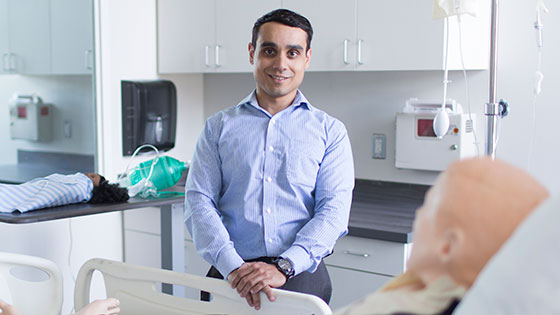
Health Professions Advising Center (HPAC)
HPAC WebsiteNationally Recognized Center for Career Development
All University of New Haven students have access to the many resources available through the University’s Career Development Center, which has been named one of the best in the nation by The Princeton Review.
From career assessments, networking, and job shadowing to on-campus interviews and salary negotiation, the Career Development Center provides the skills and connections to identify a meaningful career and an opportunity to pursue your passion.
Learn More
Charger Advantage


Biomedical Engineering Courses and Learning Outcomes
Build practical skills from the classroom to the laboratory.
Rather than learning engineering concepts only in lectures, students apply them to real biomedical problems throughout the curriculum.
The information below comes directly from the latest Academic Catalog:
Related Programs
The University of New Haven also has a master's degree for advanced study in the field.
What students will learn to do.
The program prepares students to solve complex problems, conduct experiments, communicate effectively, work in teams, and continue learning as biomedical technologies evolve.
| 1.) Identify, formulate, and solve complex engineering problems using engineering, science, and mathematics. |
| 2.) Apply engineering design to produce solutions that consider public health, safety, welfare, and broader societal factors. |
| 3.) Communicate effectively with a range of audiences. |
| 4.) Recognize ethical and professional responsibilities in engineering situations and make informed judgments. |
| 5.) Function effectively on teams that provide leadership, create inclusive environments, establish goals, and meet objectives. |
| 6.) Develop and conduct experiments, analyze and interpret data, and use engineering judgment to draw conclusions. |
| 7.) Acquire and apply new knowledge as needed using appropriate learning strategies. |
Learn from professors who are dedicated to your success.
Our faculty are leaders and innovators in their fields, bringing both deep professional experience and academic rigor to the classroom.
Upcoming Events
News
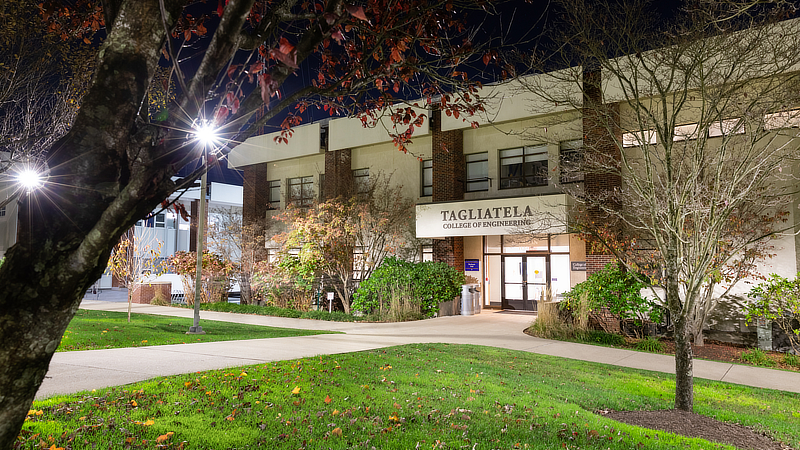
University of New Haven Elevated in Prestigious Carnegie Research Classifications
Ron Harichandran, Ph.D., the University’s Vice Provost for Research, said the new classification will bring increased visibility to the University as a research institution, enhance the ability to recruit Ph.D. and graduate students, and aid faculty in seeking grant funding, building upon the vigorous research taking place at the graduate and...
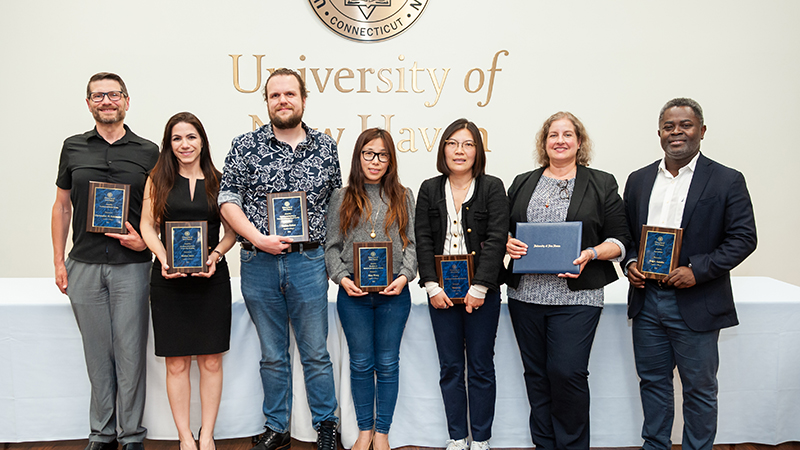
Faculty Members Recognized for Excellence In and Out of Classroom
The University community proudly celebrated the excellence of 11 faculty members at the annual Faculty Excellence Awards, recognizing their dedication to their students, their educational journeys, and their future success.
Next Steps
Whether you're still in high school or are transferring from another college, we offer full- and part-time opportunities for undergraduates from inside the U.S. and abroad. The admission process can begin as early as the end of your high school junior year.
The Application Process WebsiteWe offer a comprehensive financial aid program, with students receiving assistance in the form of grants, scholarships, student loans, and part-time employment. Funds are available from federal and state governments, private sponsors, and from university resources. More than 95 percent of the University's full-time undergraduate students receive some form of financial assistance.
Financial Aid WebsiteWANT MORE INFO?
Find out more about why the University of New Haven is a great fit for you. Our admissions team will contact you with information personalized to your interests.
VISIT
A campus visit is one of the most important parts of the college selection process. Come feel what it's like to Be a Charger!
APPLY
With more than 74,000 alumni and more than 100 years of history, #ChargerNation is the place to be. Begin Your Journey today.