 Ronald S. Harichandran, Ph.D., P.E., F.ASCE
The Capstone Design Expo is an opportunity for our students to showcase the results from their capstone design course. Student teams work to create a specific design solution for a "customer’s" real and unique need. Design and design education are, by their nature, experiential and collaborative, and our design team sponsors are our key collaborators. As a result of this collaboration, students bring energy and new ideas to meet the design need.
The design projects enable our students to put into practice what they have learned to prepare them for the workforce.
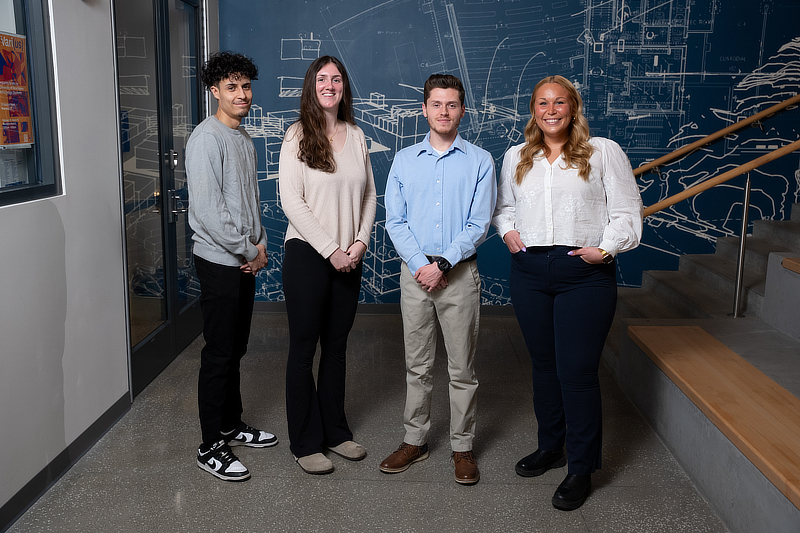
Dylan Jacobs, Cassidy Krill, Alexander Vega-Santini, and Lindsay Hogan
Dr. Nagasree Garapati, P.E.
Kyle Schmidt, Asset Strategy Lead, Albemarle Corporation
Albemarle Corporation — Committed to building a more resilient world
To design a hydrogen sulfide (H₂S) removal and recovery system for Albemarle’s bromine production facility, which processes 21.3 billion kg/year of H₂S-contaminated brine. The system will prevent H₂S from consuming chlorine in side reactions by removing it from the brine and converting the recovered H₂S into saleable products (e.g., elemental sulfur, sulfuric acid, or methyl-based products). This approach will reduce chlorine use and emissions while creating potential revenue from sulfur products, improving both economics and sustainability.
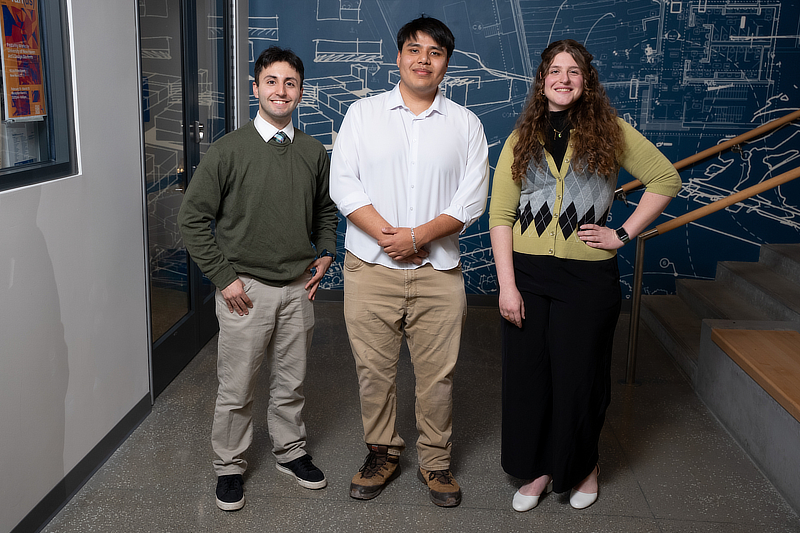
Francesco Spinelli, J. Renato Chaparro, and Meryem Oldro
Dr. Byungik Chang, P.E., F.ASCE
Ostap Lisowitch, Andrew O’Reilly, and Victor Huisman, Connecticut Department of Transportation
Connecticut Department of Transportation — a statewide agency overseeing Connecticut’s transportation systems and infrastructure
To complete a comprehensive study to replace Bridge No. 02231 on Route 202 over Still Brook in Litchfield, Connecticut. Superstructure alternatives will be evaluated based on site conditions, inspection findings, serviceability, maintainability, cost, environmental impacts, constructability, and preliminary foundation and hydraulic considerations. The final study will include selecting a single superstructure alternative and creating a fully developed design plan for the alternative.
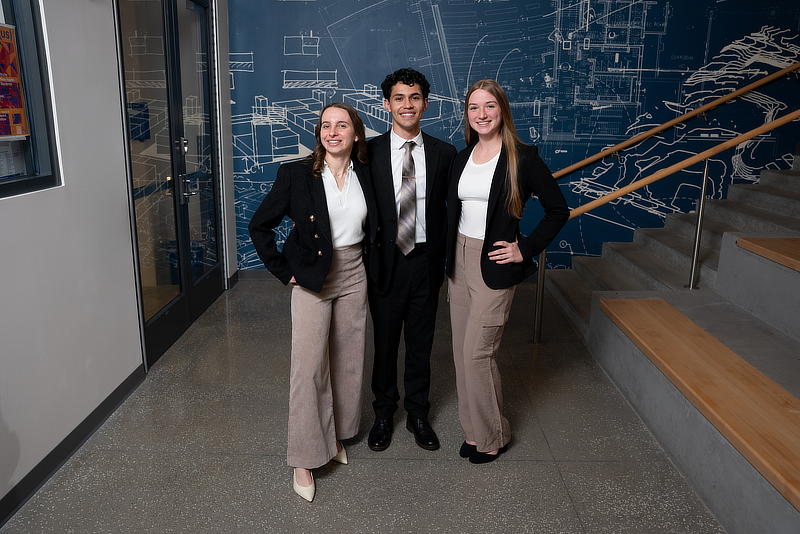
Emilia Wypasek, Derick Meza, and Candice Habay
Dr. Byungik Chang, P.E., F.ASCE
Bunmi Mfuko, Powerlayups Inc.
Powerlayups Inc. is the lead developer, providing vision and guidance for the design and engineering of a new multisport complex in Hamden
To design a multipurpose sports facility on a 4.23-acre commercial land in Hamden, Connecticut. The sponsor’s main goal is to create a contemporary sports center that can host basketball games and tournaments while also being adaptable for other sports and community events. The project will incorporate architectural planning, structural steel design, zoning compliance, and load calculations based on building codes to deliver a feasible and efficient facility concept.
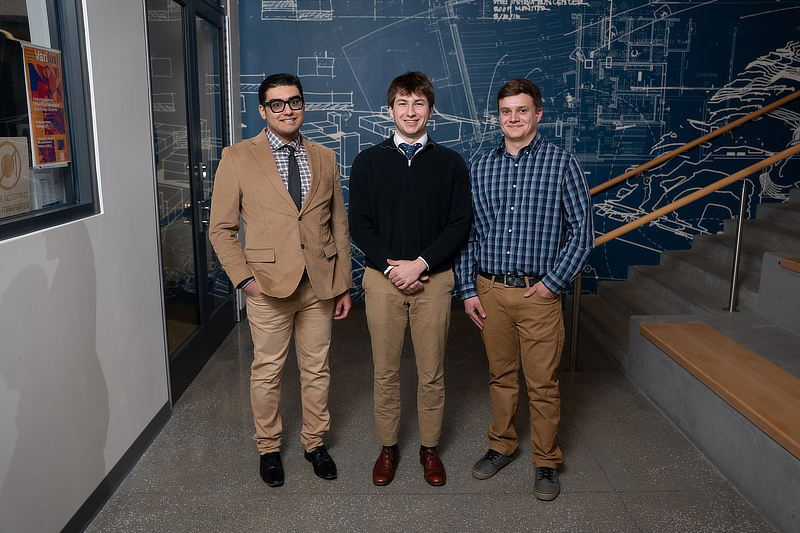
Alfonso Renteria, Wyatt Cashman, and Bryan Leslie
Dr. Byungik Chang, P.E., F.ASCE
Joseph Balskus, VHB, and Emile Pierides, city of Meriden
VHB offered expertise in traffic engineering and modern roundabout design. The city of Meriden provided project guidance and local context for the proposed roundabout design.
To create a preliminary redesign of the intersection of Paddock Avenue, Miller Avenue, and Sandy Lane to improve its safety and efficiency. The preliminary redesign will be used to apply for funding, which will require construction estimates, preliminary conditions, and proposed conditions of the intersection. The redesign will incorporate an elliptical-shaped roundabout that will improve pedestrian safety, allow for continuous flow, reduce the number and severity of crashes, and improve the overall efficiency of the intersection.
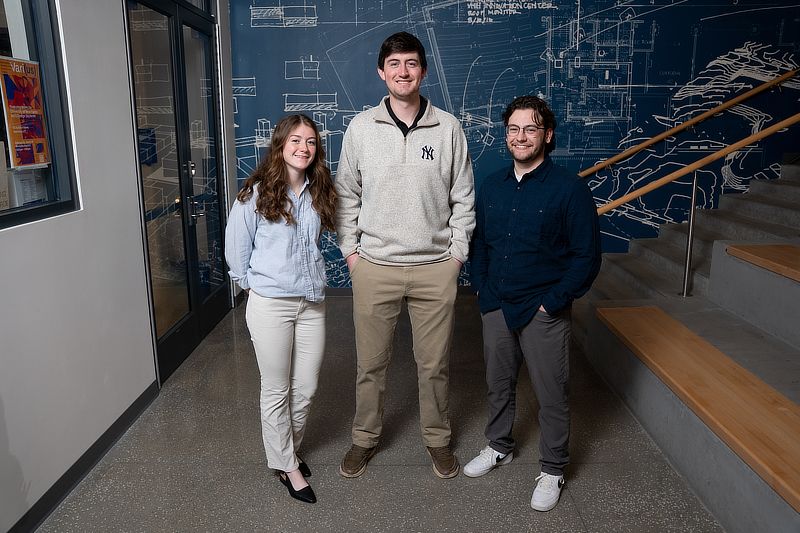
Violet Coyle, Ryan Fasula, and Thomas Sorice
Dr. Byungik Chang, P.E., F.ASCE
Pedro Martinez, BL Companies
BL Companies — provider of creative solutions that enhance the built and natural environment
To redevelop the former 7.7-acre abandoned lot into a safe, accessible, and fully code-compliant medical facility for the Town of Stonington. This redevelopment involves designing an efficient site layout for the medical office building, parking, emergency, and pedestrian access, supported by a thorough analysis of existing site, geotechnical, traffic, and environmental conditions. An efficient stormwater system will also be developed to prevent flooding and control runoff, along with site lighting and green infrastructure to support overall functionality and sustainability. All site elements will meet current state of Connecticut and Town of Stonington regulations.
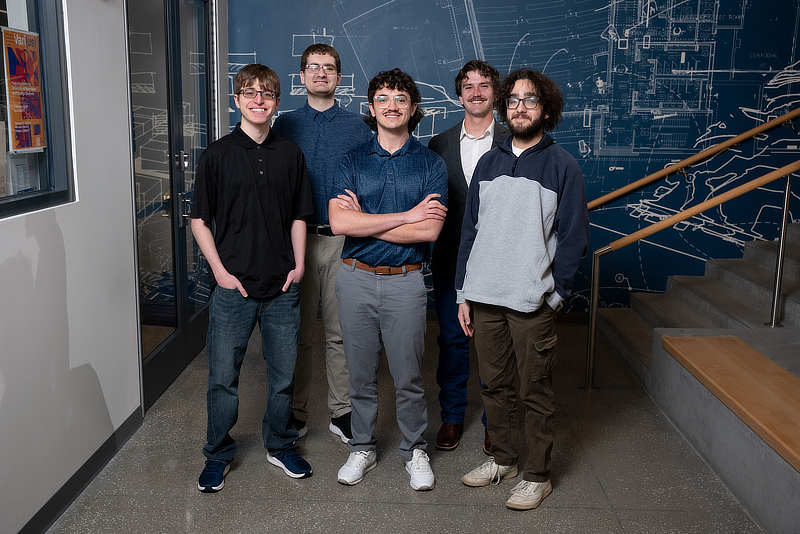
Kyle Mather, Ryan Lang, Richard Hurley, Tyler Lupkas, and Eric Garcia
Dr. Mehdi Mekni
To develop a real-time, locally hosted IDE extension that analyzes code as it is written and delivers actionable feedback on style, performance, secure coding, and software design best practices. ELEVATE is intended to reinforce professional development habits — not replace the developer. The outcome will be a functional IDE plug-in by May 2026 that improves code quality and better prepares students for collaborative software development.
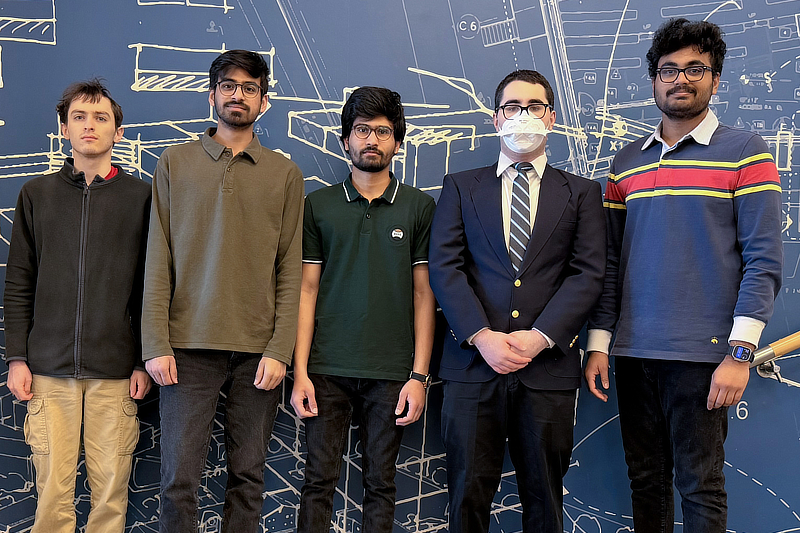
Jai Chandra Koochana, Abhiram Reddy Mukkala, Ryan Hunter, Max Liberti, and Likith Sai Vardhan Koganti
Dr. Mehdi Mekni
To develop a scalable, no-code robotics training platform for Architecture, Engineering, and Construction education to address rising automation needs driven by labor shortages, safety risks, and productivity demands. The simulator will integrate drag-and-drop task sequencing with BIM models and immersive VR/AR, supporting five–six robots and six–eight tasks. It will provide AI-based feedback on unsafe or inefficient plans and include embedded assessments to measure learning outcomes. The expected outcome is a validated multiuser platform that improves workforce readiness and expands robotics training access for non-programmers.
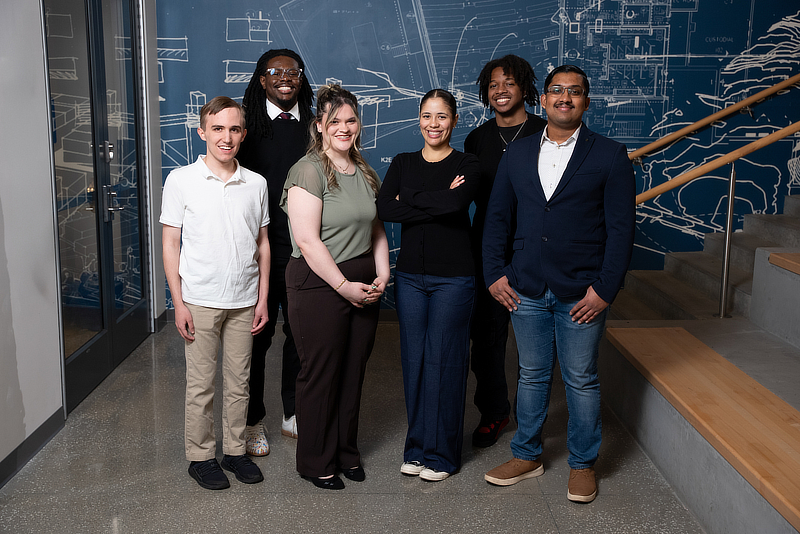
Emily King, Myles Annan, Dante White, Aidan Grise, Isaura Franco, and Arjun Aravind
Dr. Mehdi Mekni
To develop Ready2Work, a VR- and AI-enabled platform that reduces interview anxiety and improves career readiness for graduating students. The system will simulate realistic job interviews; evaluate verbal and nonverbal communication using NLP, gesture tracking, and optional biometric inputs; and provide personalized, adaptive feedback. It will also include AI-driven resume optimization and role-specific preparation guidance to improve overall interview performance.
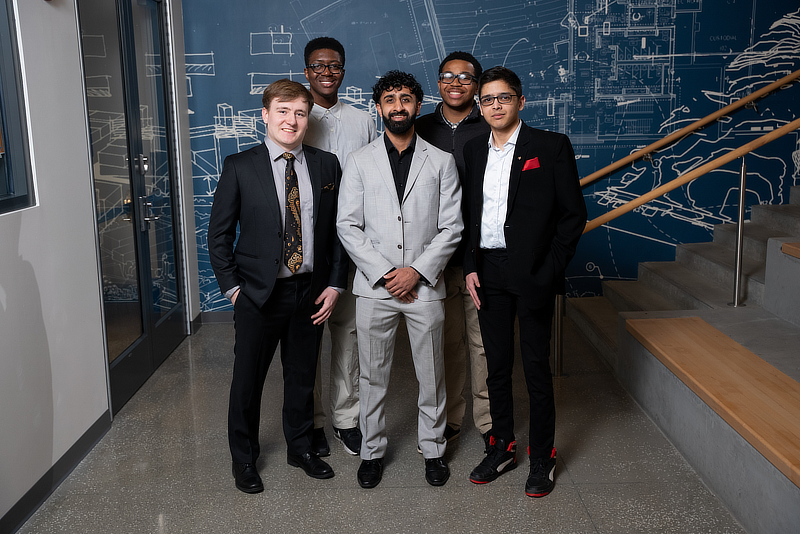
Nathan Johnson, Murtaza Amjad, Connor Funk, Yash Desai, Yung Brinney III, and Abdourahim Mbengue
Dr. Mehdi Mekni
To develop SendIt, a secure and user-friendly device-to-device file transfer system that avoids reliance on third-party cloud services. SendIt will use end-to-end encryption to protect data in transit, AI-based optimization to improve transfer speed and reliability, and pre-transfer threat scanning against a trusted database. The outcome will be a cross-platform application that enables faster, safer, and more accessible large-file sharing.
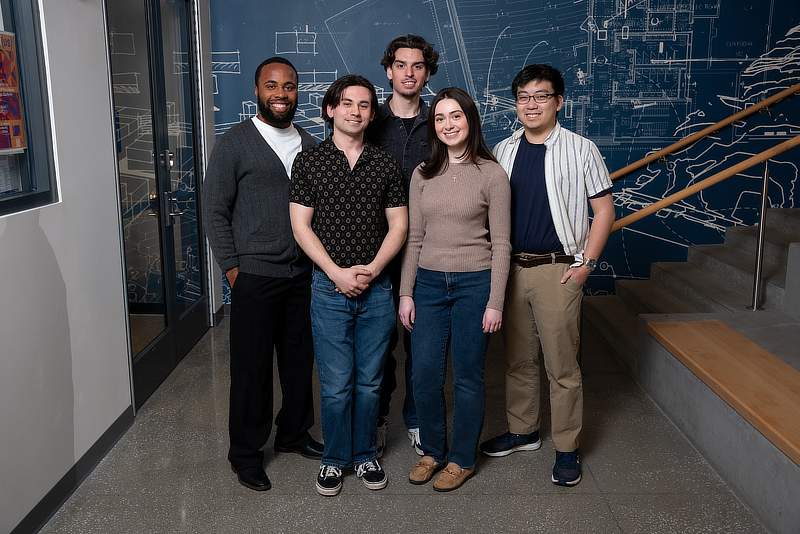
William Chieng, Sarah Svitlik, Giye Jenkins, Edward Villano, and Michael Gorney
Dr. Mehdi Mekni
Bruce Barber, Professional in Residence, 88.7 WNHU
To modernize college radio by replacing outdated software with an integrated, user-friendly platform. The project will deliver a streamlined automation client, a redesigned station website, and a student mobile app to support scheduling, remote streaming, listener interaction, and analytics. The expected outcome is improved station operations; increased student engagement; and a more accessible, relevant campus radio experience.
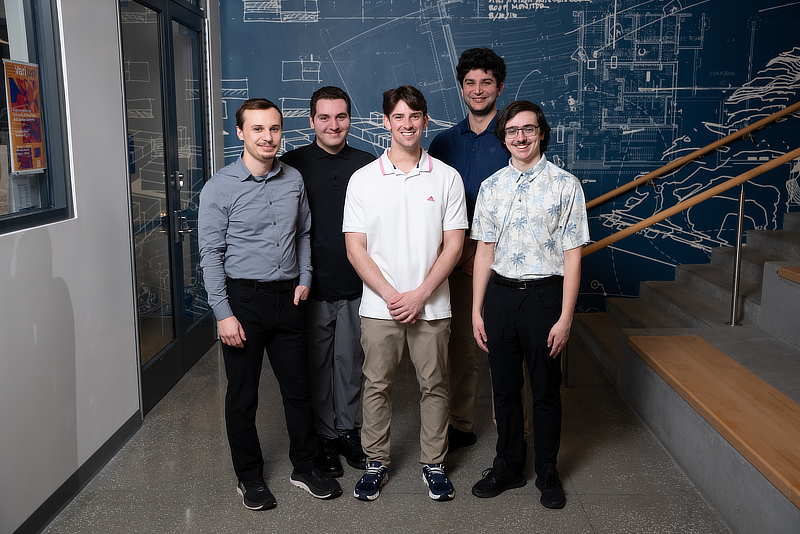
Braeden Allen, Ryan Godburn, Anthony Ciavarella, Matthew Williams, and Quinn McEnerney
Drs. Tirthankar Ghosh and Mehdi Mekni
To demonstrate how publicly available personal data combined with AI can enable targeted password-guessing attacks, revealing gaps in current password policies. The project will use these findings to propose improved security guidelines and raise awareness of the growing risk of AI-driven credential attacks in an era of widespread data sharing.
Mohammad Abunar, Michael Rich-Fiondella, and Amari Malcolm
Drs. Tirthankar Ghosh and Elmahedi Mahalal
To develop an AI-based approach to enhance 5G network-slicing security by detecting resource-starvation attacks. Using Python, the team will build a recurrent neural network to identify attack behavior, isolate the affected slice, and help prevent impact on other virtual networks sharing the same infrastructure.
Christopher Carbone, Mark Daniels, Liam Poole, and Kristine Zurovchak
Dr. Tirthankar Ghosh
Greg Bartholomew and Mark Demers
Vincent Mangiacapra, CIO, University of New Haven
To design and implement a controlled test environment to evaluate a Fortinet-based Security Operations Center (SOC) for the University of New Haven. The environment will simulate realistic network traffic, security events, and threats to support configuration and testing of Fortinet tools and workflows. The SOC will provide integrated monitoring, detection, and response capabilities while serving as a research and instructional platform that strengthens campus cybersecurity and provides students hands-on experience with enterprise security operations.
Raquel Gabriel Pita, Tyler Joseph, Yadashi Ejara, and Jalyn Sinclair
Dr. Tirthankar Ghosh
To develop a portable Raspberry Pi–based tool kit that scans a local network to identify IoT devices and assess potential vulnerabilities. Using Python scanning and packet-analysis libraries, the system will combine passive discovery with rate-limited probing to determine device types, open ports, and exposed services. It will then generate a clear risk report with prioritized findings and actionable remediation guidance, providing a low-cost vulnerability assessment tool.
Arielle Rinaldi, Christian Betten, Conor Meenan, and Holden Tarna
Dr. Tirthankar Ghosh
Greg Bartholomew
Vincent Mangiacapra, CIO, University of New Haven
To evaluate and improve the University’s mandatory cybersecurity training through controlled phishing assessments. An initial phishing test will measure susceptibility, followed by a survey to identify contributing factors and training gaps. The team will develop and deploy revised training and then conduct a second phishing test to quantify improvement and compare the effectiveness of the original and updated programs.

Justin Matos, Joseph Frattone, and Elijah Eddy
Drs. Tirthankar Ghosh and Elmahedi Mahalal
To design a controlled testbed to demonstrate vulnerabilities in fixed-code car key fob systems. Using a universal keyless-entry kit to emulate basic door lock/unlock and alarm functions, the team will capture and replay fob transmissions (e.g., with a Flipper Zero) to show how replay attacks can defeat unprotected fixed-code implementations.
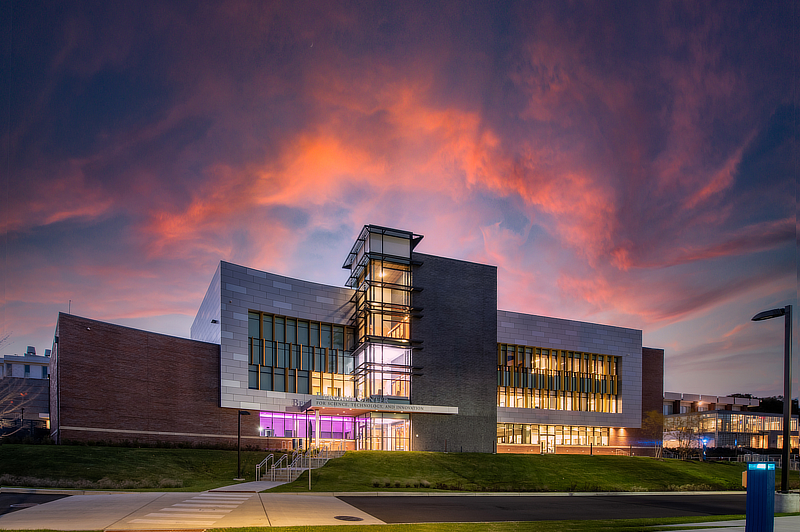
David Jervis (Computer Engineering)
Dr. Moshen Sarraf
To design and build a single-zone HVAC thermostat with a simplified touch-screen interface, stable temperature control, and a modular embedded software foundation suitable for commercialization. The system will provide intuitive user interaction, real-time control feedback, mode selection, fault monitoring, and minimum on/off timing to protect HVAC equipment. The outcome will be a proof-of-concept prototype demonstrating reliable control performance; user-friendly operation; and a robust, extensible firmware architecture.
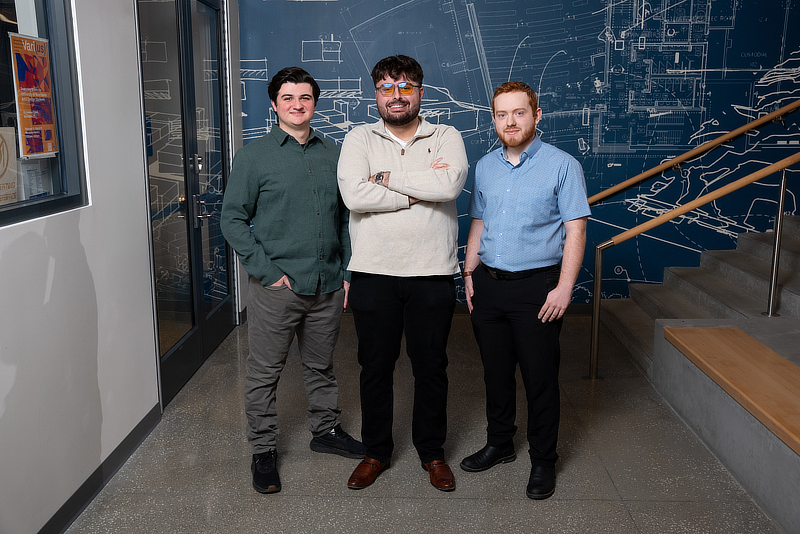
Adem Lazri, Christopher DeSimone, and Travis Blank
Dr. Mohsen Sarraf
To design a drone that flies over a power line and identifies any damaged conductors, insulators, or hardware using AI. This system will capture high resolution visual and thermal data to flag hotspots or hazards. It will provide utility crews with fast, accurate inspection results and reduce field risk while supporting faster maintenance decisions.
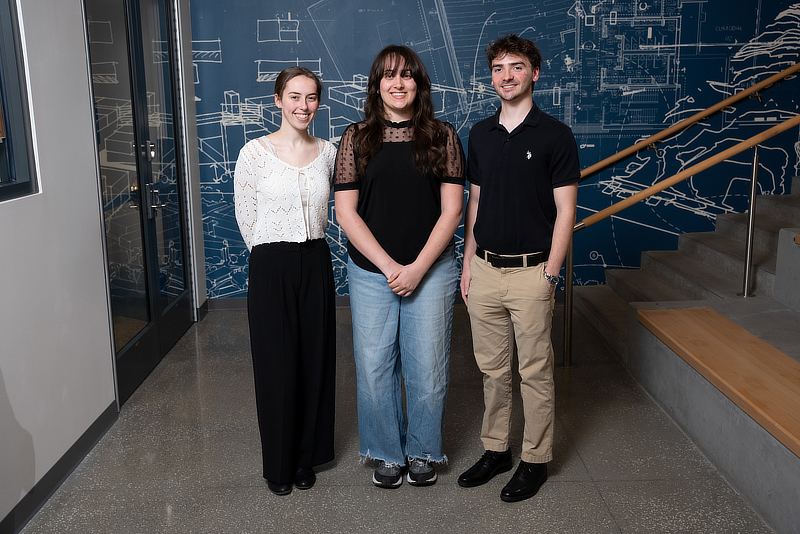
Breanna Botte, Megan Leverock, and Trevor Saccone
Dr. Mohsen Sarraf
To create a reliable, wearable system prototype that can monitor critical health parameters, such as heart rate, body temperature, sweat levels, motion, and blood oxygen levels, to enhance safety and performance of emergency firefighter personnel operating in high-stress environments. This system will be able to distinguish critical health levels during scenarios to provide reliable care to emergency personnel.
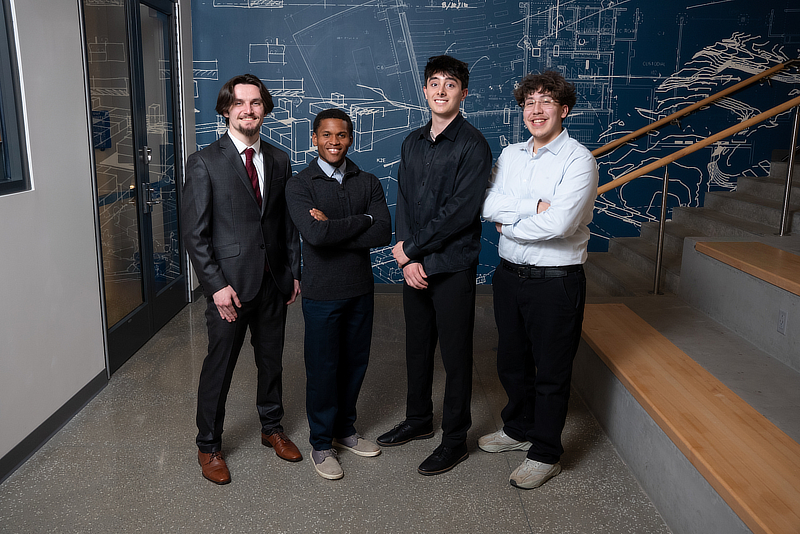
Declan Mcgrellis, Elijah Espinal, and Jake Genovese
Dr. Mohsen Sarraf
To land a drone within a three-foot by three-foot or smaller square target regardless of the weather or other natural conditions that may exist. Like the instrument landing system (ILS) in aviation, ultrasonic frequencies will be used instead to project multiple frequencies to center the drone over the surface and land it safely on the intended target. With the use of multiple ultrasonic speakers and a receiver capable of reading ultrasonic frequencies, the drone could theoretically be landed at the center of the platform safely following the same generalized concept of the ILS system.
Maximus Chueka, Joaquim Bahebura, and Nicholas Quijano
Dr. Mohsen Sarraf
Shanthala Kumar, Automation Engineer, Honeywell
Honeywell, a global leader in technology and manufacturing, delivers innovative solutions in aerospace, building technologies, fire alarms, performance materials, and safety to enhance efficiency, sustainability, and performance for customers worldwide.
To design, install, and validate a camera-based inspection cell for Honeywell parts. An experiment to discover test condition limits, as well as optimal process flow, will be conducted. These results will allow Honeywell to create a robust fire-panel testing plan that is leaner and more efficient than the current process.
Sara Connelly, Ella Nenoff, and Jack Thompson
Dr. Ismail Orabi
Thomas Frosell, Director of Innovation, The Lee Company
The Lee Company, designer and manufacturer of leading miniature fluid control technology that exceeds customer and market expectations for performance and quality.
To evaluate existing market pipetting systems to identify improvement opportunities and then design a high-frequency, air-driven pipetting system that meets or exceeds current accuracy and precision standards. Hydraulic flow schematics will be developed, the control system will be programmed, and enhanced capabilities aligned with market needs will be defined.
Kenneth McGovern, Daniel Folloni, and Michael Dos Santos
Dr. Ismail Orabi
William Welsh, Sr., Technical Fellow; Joe Nicholas, Loads and Criteria Engineer; and Dave Tabak, Sr. Nondestructive Test Engineer, Sikorsky/Lockheed Martin
Sikorsky, a Lockheed Martin Company — A global leader in supporting customers’ missions, strengthening security, and advancing scientific discovery
To enhance a fast active vibration damper to meet sponsor-defined targets for rig weight, response time, resonance frequency, and actuator force output. The system will use accelerometer and Hall-effect sensor feedback to generate adaptive counter-vibration signals and maintain stable closed-loop control, resulting in a fully operational prototype.
Zachary Freedman, and George Hallas
Dr. Ismail Orabi
Alper Arslan, Mechanical Design Engineer, and Derek Favret, Engineer Recruitment and Development, RBC Bearings
RBC Bearings, designer and manufacturer of highly engineered precision bearing components and essential systems for the industrial, aerospace, and defense industries
To design polymer rod-end bearings that reduce weight and improve corrosion resistance relative to metal alternatives while remaining simple and efficient to manufacture and cost-competitive. The bearings must be compact enough for a remote-controlled car and durable in outdoor conditions, including freezing temperatures, UV exposure, dust, and moisture.
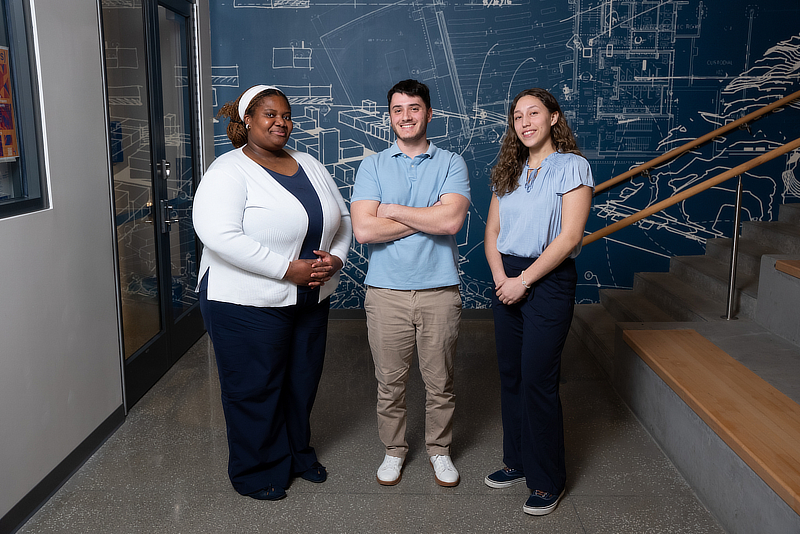
Savanna Pantoja, Markus Schuele, and Beverly Ogbonne Ukoha
Dr. Ismail Orabi
Nicholas Schreiber, Principal Product Engineer, and Robert Knapp, Principal R&D Engineer, Medtronic
Medtronic, a global leader in medical technology, services, and solutions with a mission to alleviate pain, restore health, and extend life
To design and build a robust, low-cost fluid subassembly for the Clearify Visualization System that withstands harsh shipping conditions. The redesign will strengthen structural integrity while preserving key performance requirements, including compatibility with 5–11 mm laparoscopes, specified cleaning/defogging capacity, and white-balance stability.
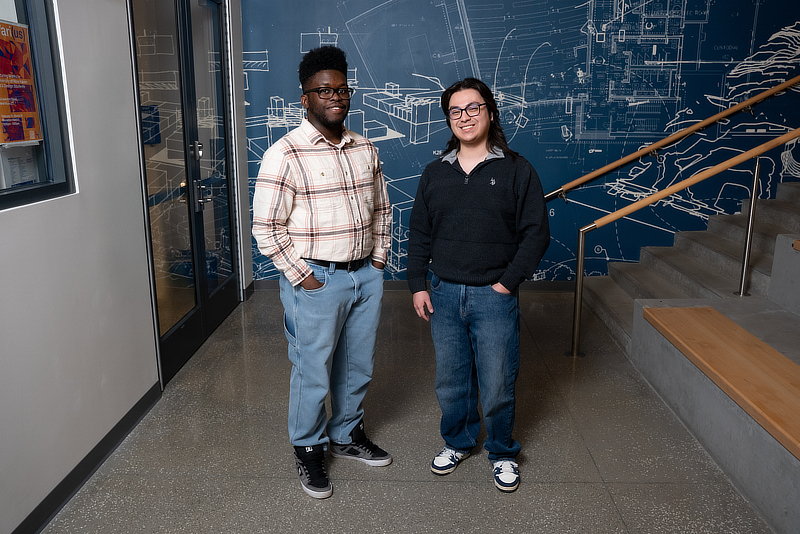
Jeffrey Benavides and Loydon Henry-Phillip
Dr. Ismail Orabi
Matthew Lang, Senior Automation Engineer, and Marc D’Urbano, Engineering Manager, Mechanical, Edgewell
Edgewell Personal Care, a trailblazing personal care company that leverages its employees’ creativity and passion to challenge convention and drive growth
To improve and partially automate the blade-strip weld dressing (grinding) process to reduce operator-dependent variation, improve safety, and cut cycle time. Iterative prototypes will be validated through testing and analysis using sponsor/operator feedback and tools such as SolidWorks and ANSYS.
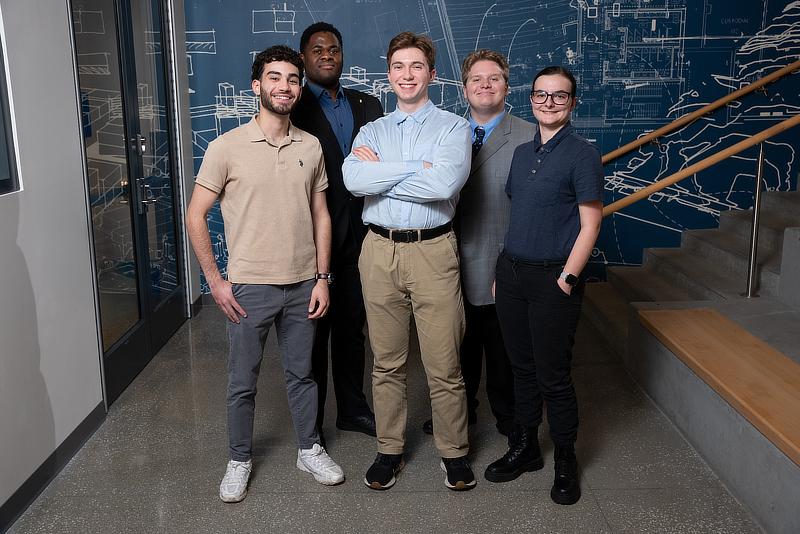
Oluwasegun Ashely, Jason Cordone, Evan Morazzini, and Amanda Plantier (Mechanical Engineering); and Spenser Tote (General Engineering)
Dr. Ganesh Balasubramanian, F.ASME
Jeff Mazur, Mihir Desai, and Bill Dalton, Systems, Electronics & Controls, Triumph
Triumph Group — A global leader in the aerospace industry that specializes in the design, engineering, manufacturing, and repair of the aerospace and defense systems, subsystems, components, and structures
To develop a vane pump concept for aircraft applications that operates stably across a 100 percent–110 percent flow range while minimizing axial and radial thrust. The design will address limitations of unbalanced vane pumps that can overload bearings and lead to failure, and it will evaluate key risks, including cavitation, torque overload, vane wear, and bearing loads.
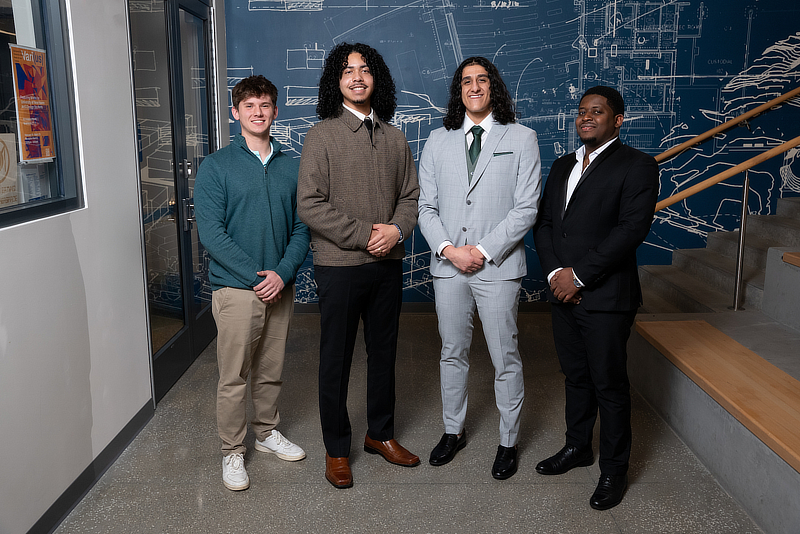
Michel Pascal Louissaint, Amir Soliman, and Jakub Czachor (Mechanical Engineering); and Jhoaell Ruiz (General Engineering)
Dr. Ganesh Balasubramanian, F.ASME
Jeff Mazur, Mihir Desai, and Kyle Shaughnessy, Systems, Electronics & Controls, Triumph
Triumph Group — A global leader in the aerospace industry that specializes in the design, engineering, manufacturing, and repair of the aerospace and defense systems, subsystems, components, and structures
To assess the feasibility of using jet fuel as a lubricant for rolling-element bearings, focusing on performance limitations associated with its lower viscosity and lubricity compared to those of conventional oils. The project will combine a literature review with analysis of bearing materials, designs, and configurations for full fuel immersion, evaluating life, wear, and windage under representative loads, speeds, temperatures, and fuel types. The outcome will be a comparison of candidate bearing options and a set of design recommendations to guide fuel-lubricated bearing applications.
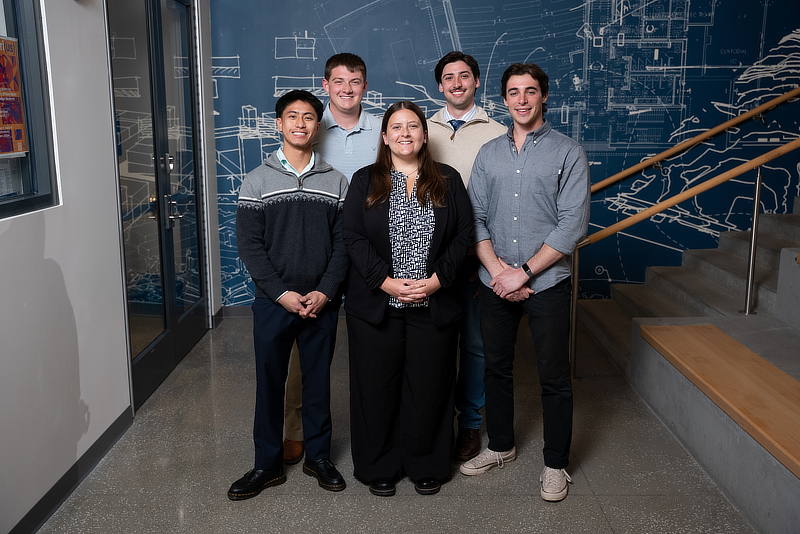
Ryan Barry, Matthew Fermo, Alexis Fernandez, Timothy Silva, and Quan Nguyen
Dr. Ganesh Balasubramanian, F.ASME
Richard Cerniglia, Engineering Supervisor, Fluid Systems
General Dynamics Electric Boat — A recognized leader in the design, construction, and life cycle support of submarines for the US Navy.
To identify and evaluate methods to reduce noise and extend the set-to-reseat interval of pressure relief valves used by General Dynamics Electric Boat for tank venting. Through physical testing and computer simulations, the project will develop modification concepts that reduce cycling, improve valve life, and enhance overall operational performance.
We thank our industry sponsors who served as customers for our students as well as supporting their prototyping expenses. As customers, they gave valuable time and insights that uniquely benefited our students with an experiential design education in a real-world setting, which greatly complements the team mentoring by our faculty colleagues. Their generous commitment to our students brought their design education to life.