
Structural Engineering Research
Researcher:
Byungik Chang, Professor of Civil Engineering and Nadia M. Mirzai, Post-Doctoral Fellow
Project Description:
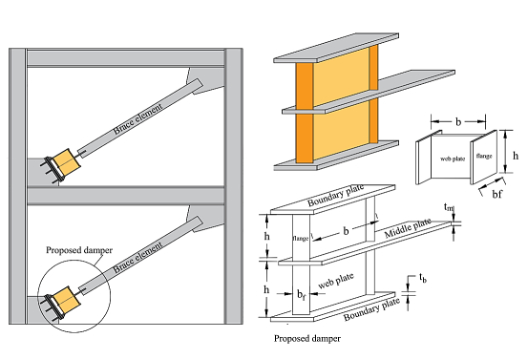
Although Concentrically Braced Frame (CBF) is a system with high lateral stiffness,
buckling under compressive forces has made it a system with weakness in ductility
and not appropriate enough for high seismic zones. In this study, a new metallic damper,
which can be simply constructed, employed in CBF, and replaced after severe earthquakes,
is investigated. This damper includes two shear panels that act as an I-shaped shear
link beam for the energy dissipation aim.
Status:
Completed
Dissemination:
Journal of Constructional Steel Research
https://doi.org/10.1016/j.jcsr.2022.107482
Advisor:
Byungik Chang, Professor of Civil Engineering
Graduate Student:
Thippesh Bethur Hanumanthareddy
Sponsor:
Provost Assistantship
Project Description:
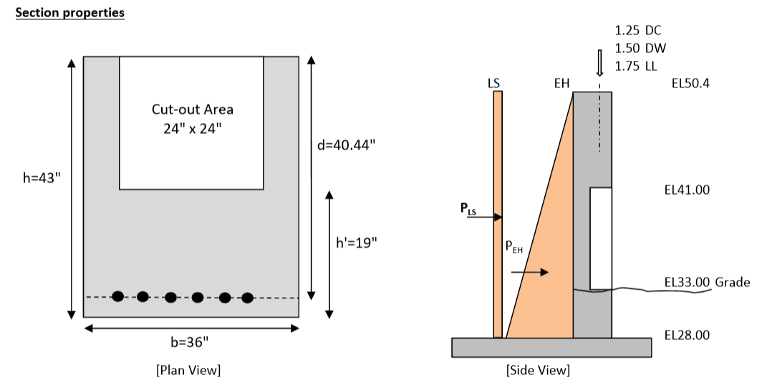
An abutment is one of the main components in the bridge. Safety niche is a cut-out
on a portion of abutment which act as a temporary shelter for bridge working. A finite
element analysis for the investigation of effect of positioning Safety niche along
the reinforced concrete Abutment in a bridge will carry and result will be recordable.
Any change in abutment may cause damages to the concrete abutment and encounter the
bridge structure in danger. Flexural behavior of concrete is an important factor in
view of creating a growing crack in cut-out in abutment.
Advisor:
Byungik Chang, Professor of Civil Engineering
Graduate Student:
Thanin Chanmalai
Sponsor:
Provost Assistantship
Project Description:
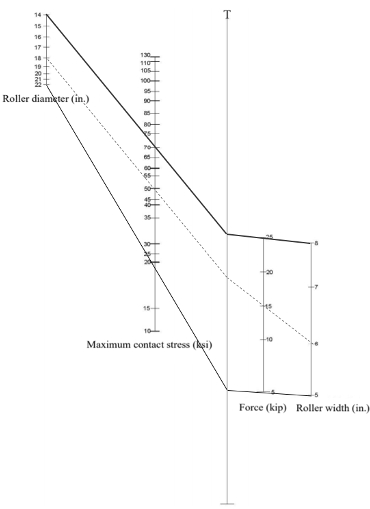
An abutment is one of the main components in the bridge. Safety niche is a cut-out
on a portion of abutment which act as a temporary shelter for bridge working. A finite
element analysis for the investigation of effect of positioning Safety niche along
the reinforced concrete Abutment in a bridge will carry and result will be recordable.
Any change in abutment may cause damages to the concrete abutment and encounter the
bridge structure in danger. Flexural behavior of concrete is an important factor in
view of creating a growing crack in cut-out in abutment.
Status:
Completed
Dissemination:
https://doi.org/10.5267/j.esm.2021.7.001
Advisor:
Byungik Chang, Professor of Civil Engineering
Graduate Student
Saron G. Hagos
Sponsor:
Provost Assistantship
Project Description:
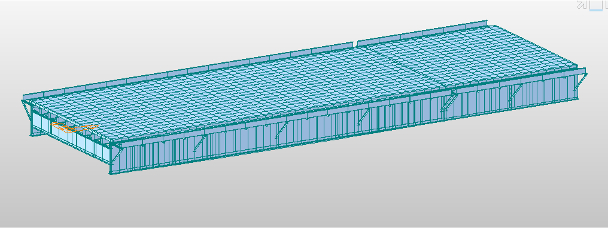
A two-girder bridge consists of concrete deck, stringer and floor beams. There is
no guideline in determining live load moment distribution factor for floor beams.
A computer-aided structural analysis will be conducted to obtain the live load moment
distribution of the floor beams for a two-girder bridge.
Status:
Progress
Advisor:
Byungik Chang, Professor of Civil Engineering
Graduate Student
Anbesh Rawal and Kevin Misaro
Sponsor:
Graduate Engineering Endowed Fellowship
Provost Assistantship
CT NASA Space Grant
Project Description:
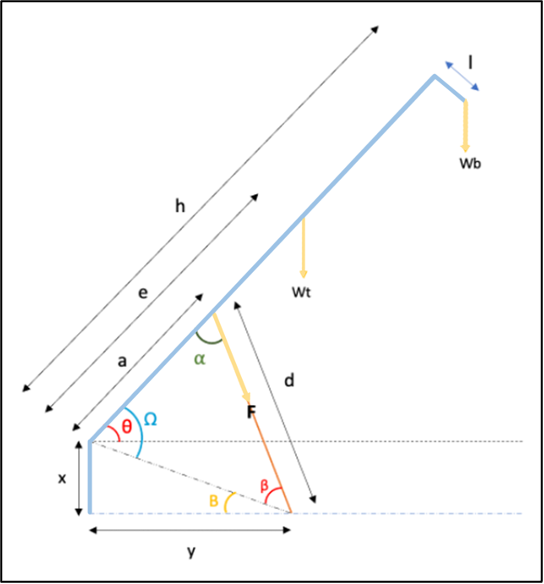
Introduction of alternative technologies relating to the tilt-up method of wind turbine
erection have reinvigorated the proposed energy objectives. By way of hydraulic cylinders,
which are incorporated as a component of the wind towers, and the introduction of
a hinge joint slightly above the base of the tower, turbines can be put up and laid
down with ease. Despite this revolutionary discovery, the load bearing capacity of
these cylinders, as well optimal position selection, are imperative to avoid any unexpected
accidents. This discovery can prove priceless in achieving the preset goals for energy.
Status:
Ongoing
Advisor:
Goli Nossoni, Associate Professor of Civil Engineering and Byungik Chang, Professor
of Civil Engineering
Graduate Student
Harshitha Peddakanti
Sponsor:
Graduate Engineering Endowed Fellowship
Project Description:
The proposed study will feature a comprehensive evaluation of the Perry Memorial Arch.
This entails utilizing scaled models of the Perry Memorial Arch to determine general
dimensions. Additionally, a conclusive material evaluation will be conducted so as
to know all constituent entities that make up the structure.
Status:
Progress
Advisor:
Byungik Chang, Professor of Civil Engineering
Graduate Student
Christopher Ong
Sponsor:
Provost Assistantship
Project Description:
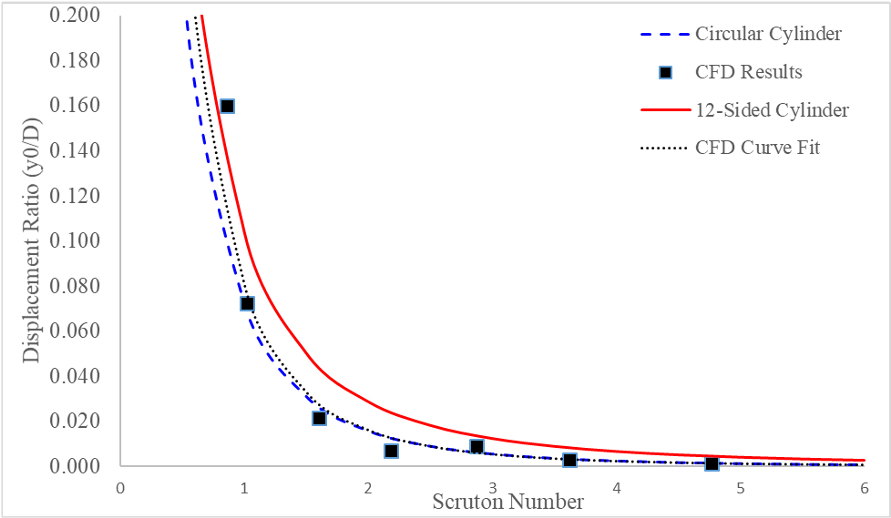
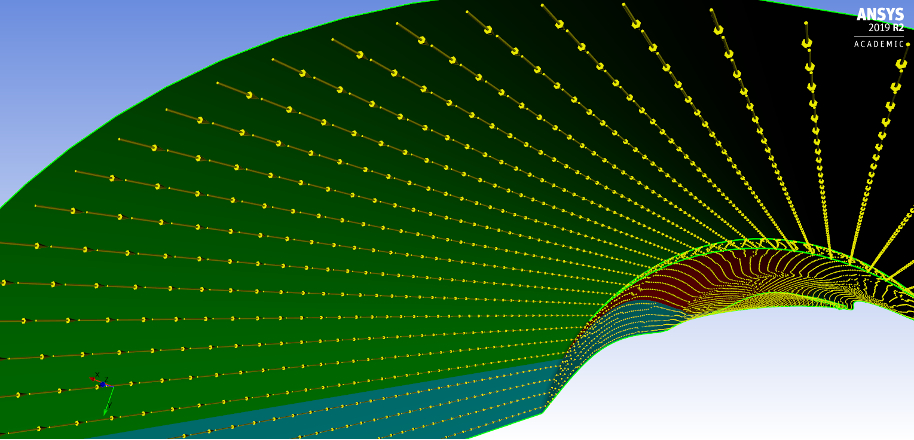
High mast light poles (HMLP) are used nationwide on major interstates and at local
intersections for luminary purposes in the United States. The HMLPs are subjected
to major oscillatory wind loading which may cause fatigue and earlier life expediency
failure. Numerical modeling with the use of Computational Fluid Dynamics (CFD) is
proposed to simulate the typical shape (dodecagonal cylinders) of the HMLPs and be
validated with wind tunnel experiments.
Status:
Completed
Dissemination:
https://doi.org/10.1016/j.jweia.2020.104130
Advisor:
Byungik Chang, Professor of Civil Engineering
Graduate Student
Christopher Ong
Undergraduate Student
Jongsung Lee
Sponsor:
Iowa DOT and Iowa State University
Project Description:
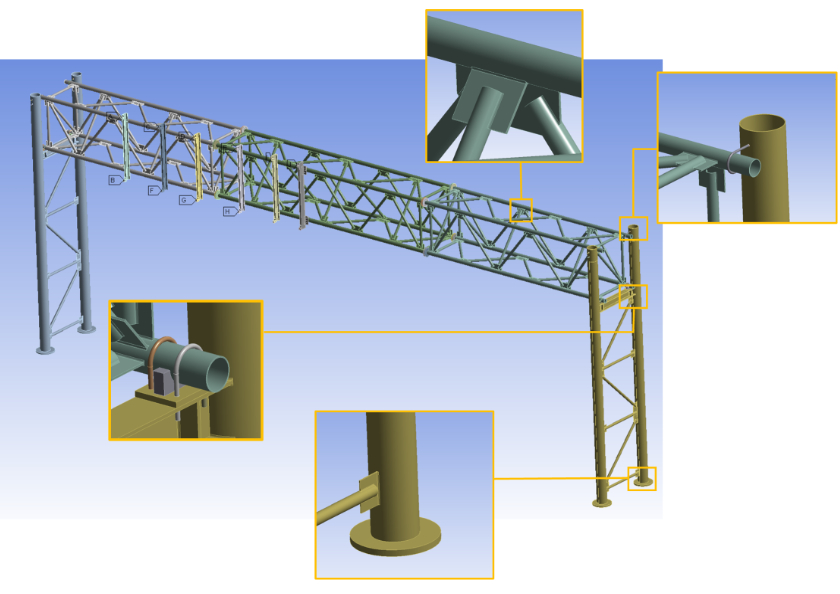
Dynamic Messaging Signs (DMS) are found in operation over freeways, expressways, and
other major intersection that provide information to travelers. If the DMS structure
fails, then pedestrians and motorists can be harmed. The objective of this study is
to analyze thermal induced fatigue life of highway overhead support structures. Field
monitoring, mathematical analysis and finite element modeling were employed to perform
the objective. The finite element modeling extends to two different type of connection
(Slotted gusset welded joints and tube-to-tube welded joints) and two different materials
(structural steel and aluminum alloy). Based on the estimated fatigue life for the
overhead truss structures, structural steel slotted gusset welded connection type
provides larger fatigue life than other cases.
Status:
Completed
Dissemination:
https://doi.org/10.1061/(ASCE)CF.1943-5509.0001416
Advisor:
Byungik Chang, Professor of Civil Engineering
Graduate Student
Omar Morales Escudero
Sponsor:
StarWind, VT
Project Description:
A comparative analysis was done between the baseline and two proposed blades, taking
into consideration the structural resistance and the safety factors recommended by
certification agencies. Several benefits were found in the use of balsa wood as a
core material, improving the buckling capacity, based on DNV GL guidelines, and keeping
the weight low when compared with the original design. On the other hand, the addition
of a third shear web for the other solution demonstrated a practical approach to increase
the stiffness behavior and guarantee a safe area of buckling under IEC guidelines.
Status:
Completed
Dissemination:
Confidential
Advisor:
Byungik Chang, Professor of Civil Engineering
Graduate Student
Daniel Adamu Shedo
Sponsor:
TCoE Graduate Research Fellowship
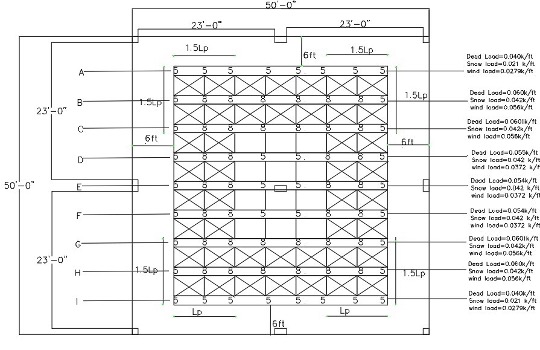
Project Description:
The project is mainly focused on uplift wind calculation to determine the optimal
number of required ballast, roof slab serviceability analysis to determine sustainability
in the form of long-term deflection, and a feasibility study on economic benefits
of PV installation. A continuous two way reinforced concrete slab which can be a representative
case for New York City’s buildings’ roof top has been selected and analyzed. It is
assumed that the building has undergone regular maintenance that will avoid substantial
deflection at the start of the analysis and the building is classified under risk
category II. Building heights of 80ft, 60ft and 40ft were used. A total of 18 cases
based on height and exposure class were modeled using finite element modeling software
to analyze Pre and Post PV installation deflections. Economic Feasibility study for
PV installation was also conducted.
Status:
Completed
Dissemination:
Under review