
Construction Engineering and Management Research
Researcher:
Abe Ardeshir, Practitioner in Residency of Civil Engineering
Project Description:
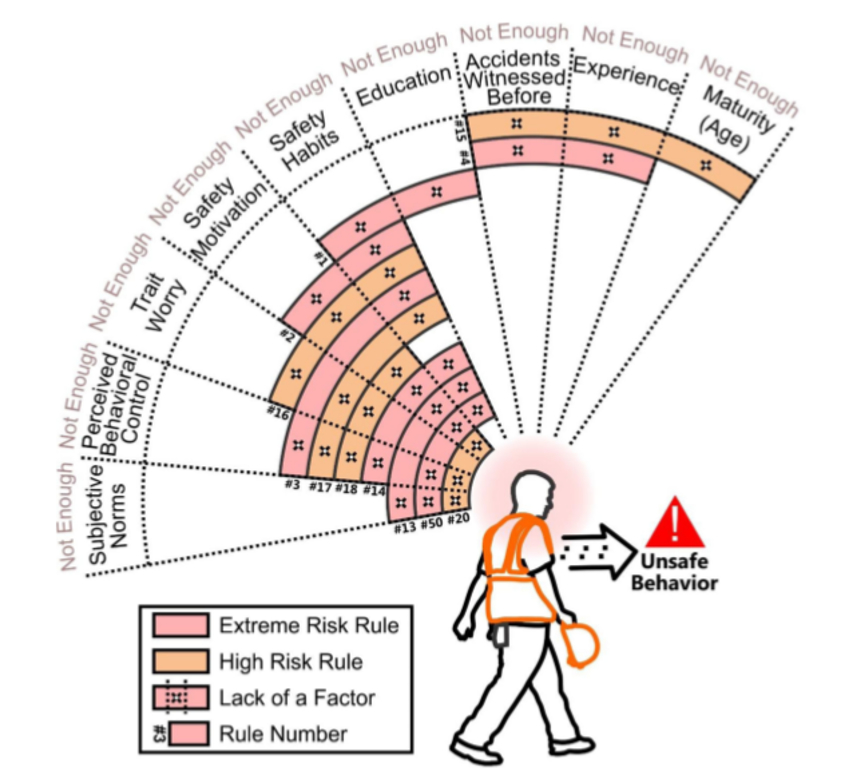
Unsafe behavior as a direct cause accounts for some 80% of accidents in the construction
industry. While numerous studies have investigated the factors that influence unsafe
behavior, most of them have approached the problem from a statistical standpoint,
which is unable to provide causality patterns of how unsafe behavior forms. This paper
illuminates the causality patterns obtained from a series of near-miss fall incidents
through a practical study using a video camera system to record and analyze the unsafe
behavior of workers. A total of 1347 cases of near-miss incidents were obtained in
two weeks. Association Rules method was employed to verify the revealed causality
patterns of workers’ unsafe behavior, and a risk matrix was developed based on the
indicators of rules to classify workers’ risk level. Results indicate that habits,
motivation, perceived behavioral control, and subjective norms are the strongest contributing
factors to unsafe behavior. While results introduce a new research perspective on
the concept of construction safety behavior, the practical insights gained hereby
enable construction managers to better analyze the combined negative effect of causal
factors on workers’ safety behavior.
Status:
Completed
Dissemination:
https://doi.org/10.1080/15623599.2020.1839704
Researcher:
Abe Ardeshir, Practitioner in Residency of Civil Engineering
Project Description:
Travel distance -mostly used in safety and cost objective functions- is the main parameter
optimized in construction site layout planning (CSLP) as an optimization problem.
While normal CSLP processes assume that every movement at a construction site goes
through the particular paths they have assigned, this article presents an innovative
method to consider worker behavioral uncertainty (WBU) in whether and how workers
follow or deviate from the given paths. In this research, fuzzy graph theory (FGT)
helps CSLP consider WBU and shows improved efficiency compared to conventional approaches.
The new approach is illustrated in a case study project. The results are affected
by WBU in terms of transportation costs and safety risks, but they are still within
the range consistent with the literature. Considering WBU through the algorithm presented
in this article makes the assumed travel paths more realistic and, thus, CSLP more
efficient.
Status:
Completed
Dissemination:
https://doi.org/10.1016/j.autcon.2021.103574
Advisor:
Byungik Chang, Professor of Civil Engineering
Graduate Student:
Harish Kumar Goud Erukala and Surendra Kapar
Project Description:
The United States has one of the largest road network in the world, which is managed
by the State and federal transportation departments. Roughly 200 billion dollars are
spent on the transportation sector each year, with 39% of that amount going toward
road infrastructure, indicating the priority given to improve roadway and highway
infrastructure.
The United States has one of the largest road network in the world, which is managed by the State and federal transportation departments. Roughly 200 billion dollars are spent on the transportation sector each year, with 39% of that amount going toward road infrastructure, indicating the priority given to improve roadway and highway infrastructure.
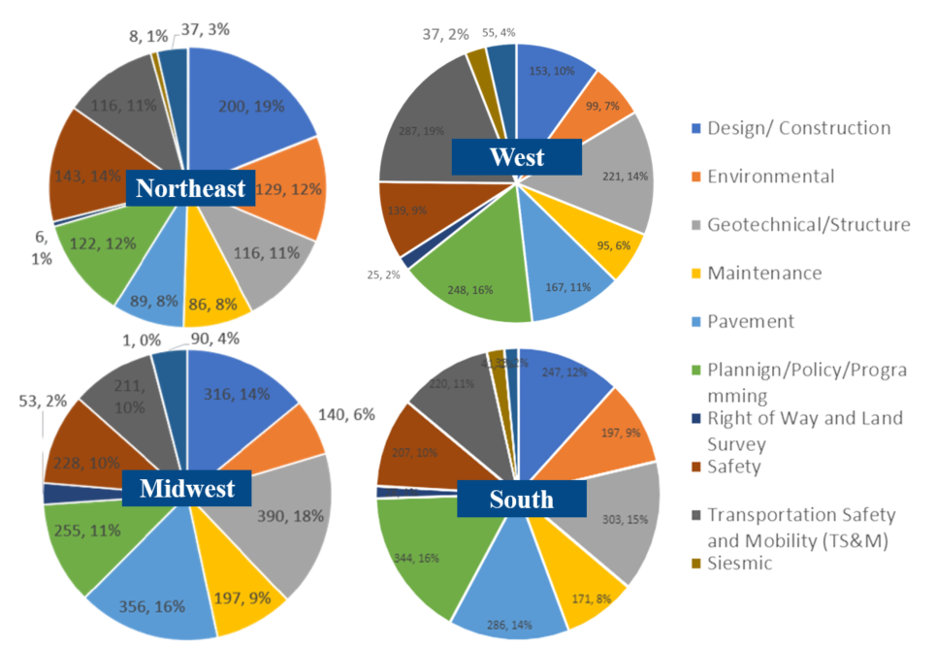
In this study, we review the papers and publications from every state, classify them by sectors, and evaluate the level of significance that a DOT has given to each topic during the last 10 years. We also discovered a number of characteristics under these research sectors that influence road projects. We made an effort to collect all the information required from each state to identify the DOT's area of interest that requires more focus and determine whether or not research investments are being made in the right areas by examining the weight each state's DOT gives to that particular sector.
Status:
Ongoing
Advisor:
Clifford Schexnayder, Eminent Scholar Emeritus, Arizona State University
Byungik Chang, Professor of Civil Engineering
Graduate Student:
Muhammad Rauf Shaker
Project Description:
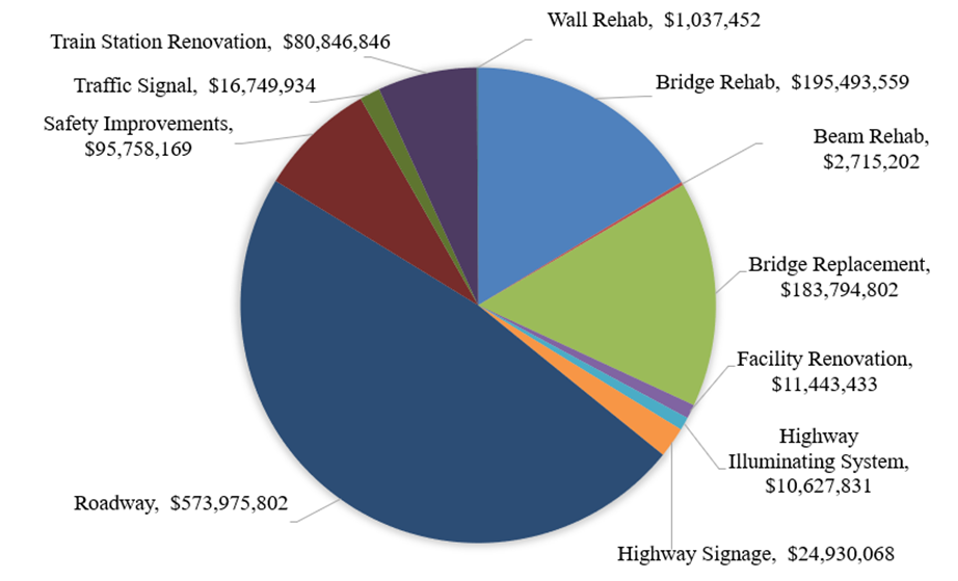
The United States has one of the largest road network in the world, which is managed
by the State and federal transportation departments. Roughly 200 billion dollars are
spent on the transportation sector each year, with 39% of that amount going toward
road infrastructure, indicating the priority given to improve roadway and highway
infrastructure.
Status:
Ongoing
Dissemination:
ASCE Journal of Practice Periodical on Structural Design and Construction, Under Review